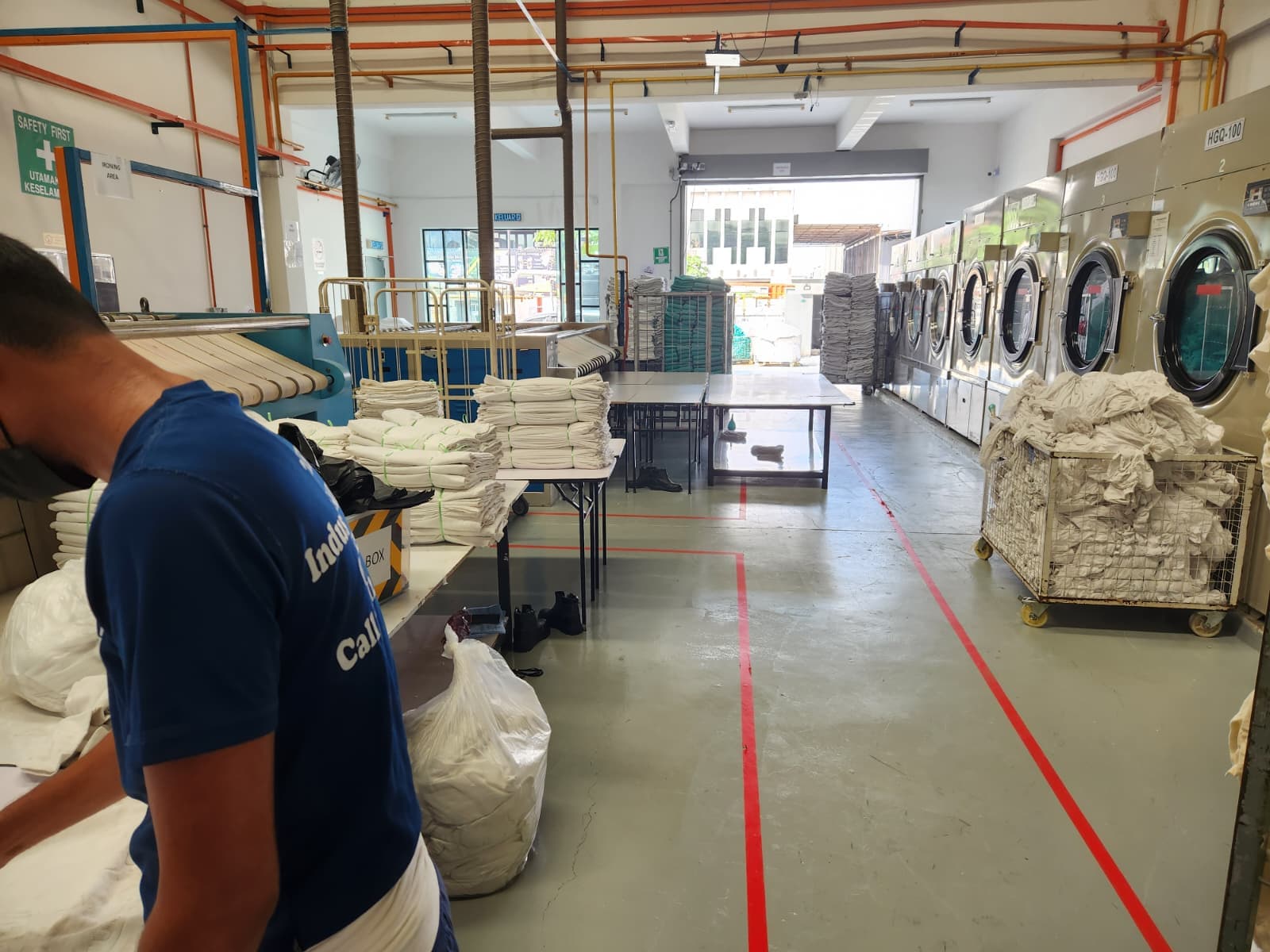
Uniforms are a recurring cost, and how they are washed decides whether that cost is small or large. Aggressive or careless laundering wears garments out far faster than the work itself does. This guide covers what actually extends workwear life and how a controlled commercial process protects your fleet wash after wash.
What actually wears workwear out
Most uniforms fail at the wash, not on the job. Overdosing detergent, excessive heat, harsh mechanical action, and over-drying break down fibres, fade colour, and crack prints long before the garment would naturally wear out. Getting these factors right is the core of extending garment life.
- →Too much detergent weakens and stiffens fibres
- →Excess heat fades colour and damages prints
- →Harsh mechanical action frays seams and edges
- →Over-drying makes fabric brittle
Why correct dosing beats more detergent
More chemistry does not mean cleaner workwear; it usually means residue left in the fabric that stiffens it and shortens its life. The right dose is matched to the soil level and fabric, so the garment comes out clean without carrying excess product. Controlled dosing is one of the simplest ways to keep workwear soft and serviceable for longer.
Temperature and drying done right
Heat is useful for shifting soil but punishing on fabric when it is set too high or held too long. A proper process uses the lowest effective temperature for the soil and dries to the right point rather than baking the garment dry. Arifa runs sixteen dryers across two Johor Bahru factories, which gives the control needed to dry correctly instead of overheating a rushed load.
- →Use the lowest effective wash temperature
- →Avoid over-drying that makes fabric brittle
- →Dry to the right point, not bone dry
- →Controlled drying protects prints and elastic
Sorting and handling that prevents damage
Throwing every garment into one load means delicate items take the same beating as heavy coveralls. Sorting by fabric and soil level lets each batch get the cycle it needs, which protects the lighter garments from unnecessary wear. Keeping clean and soiled linen apart, as we do throughout the process, also stops grease and grime transferring onto items that would otherwise stay clean.
Why a controlled process protects your fleet cost
When uniforms last their full service life, replacement spend drops and crews stay in presentable kit. A consistent commercial process delivers the same controlled wash every time, so you are not gambling garment life on whoever loaded the machine that day. Over a full fleet, that consistency is where the real saving sits.