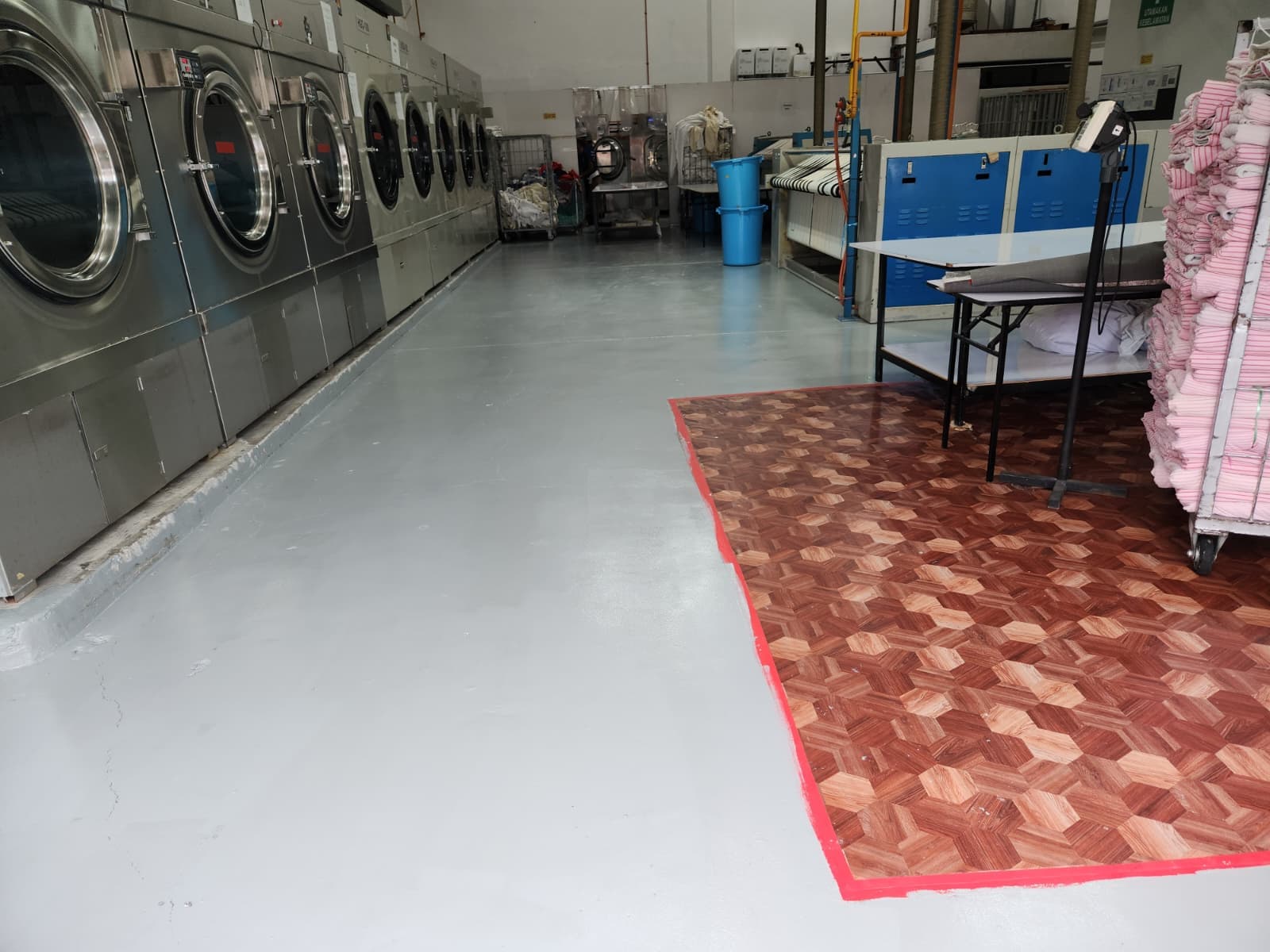
Water is one of the largest inputs in any commercial laundry, and a plant running heavy daily volumes uses a lot of it. Water reuse has become a common talking point with vendors, but the term covers very different things in practice. This article explains what laundry water reuse actually means, where it fits in a wash process, and what to ask before you take a sustainability claim at face value.
What does water reuse mean in a laundry?
Water reuse means capturing water from one part of the wash cycle and putting it back to work somewhere it does not need to be perfectly clean. The simplest version recovers the final rinse, which is the cleanest water in the process, and holds it to use as the first wash or pre-wash on the next load. More advanced setups filter and treat recovered water so it can re-enter earlier stages. The point is to reduce fresh water draw without compromising the final rinse that touches clean linen.
- →Final rinse water recovered for the next pre-wash
- →Filtered water returned to earlier wash stages
- →Fresh water reserved for the final rinse only
Why it matters for a high-volume plant
A plant handling large daily tonnage of hospital, hotel, and restaurant linen runs many wash cycles back to back. At Arifa we can process up to 25 tonnes a day across two Johor Bahru factories, so even modest water savings per cycle add up across a 24/7 operation. Reuse also smooths demand on the local supply, which matters during dry spells or supply interruptions in the Johor Bahru area.
Where reuse must never cut corners
The hard line is the final rinse and anything touching clean, finished linen. Recovered water is appropriate for pre-wash and early stages where soil is being lifted, not for the rinse that determines how clean the linen leaves the machine. For healthcare linen in particular, thermal disinfection temperatures and the integrity of the final rinse cannot be traded away for water savings. Reuse should sit upstream of disinfection, never around it.
What reuse does not fix on its own
Water reuse is one efficiency lever, not a complete sustainability story. It does little for energy use, which is driven mostly by heating water and drying. It also depends on consistent filtration and maintenance, because recovered water carries lint, fibre, and detergent residue that must be removed. A reuse claim without a maintenance routine behind it is a claim worth questioning.
- →It does not reduce heating or drying energy
- →It needs reliable filtration to stay safe
- →It depends on consistent maintenance, not just install
What to ask a Johor laundry vendor
Before you accept a water reuse claim, ask where in the cycle recovered water is used and where fresh water is guaranteed. Ask how recovered water is filtered and how often that filtration is serviced. For clinical or food-contact linen, confirm that reuse never touches the disinfection or final rinse stage. A vendor that can answer plainly is far more credible than one that simply prints a green logo.