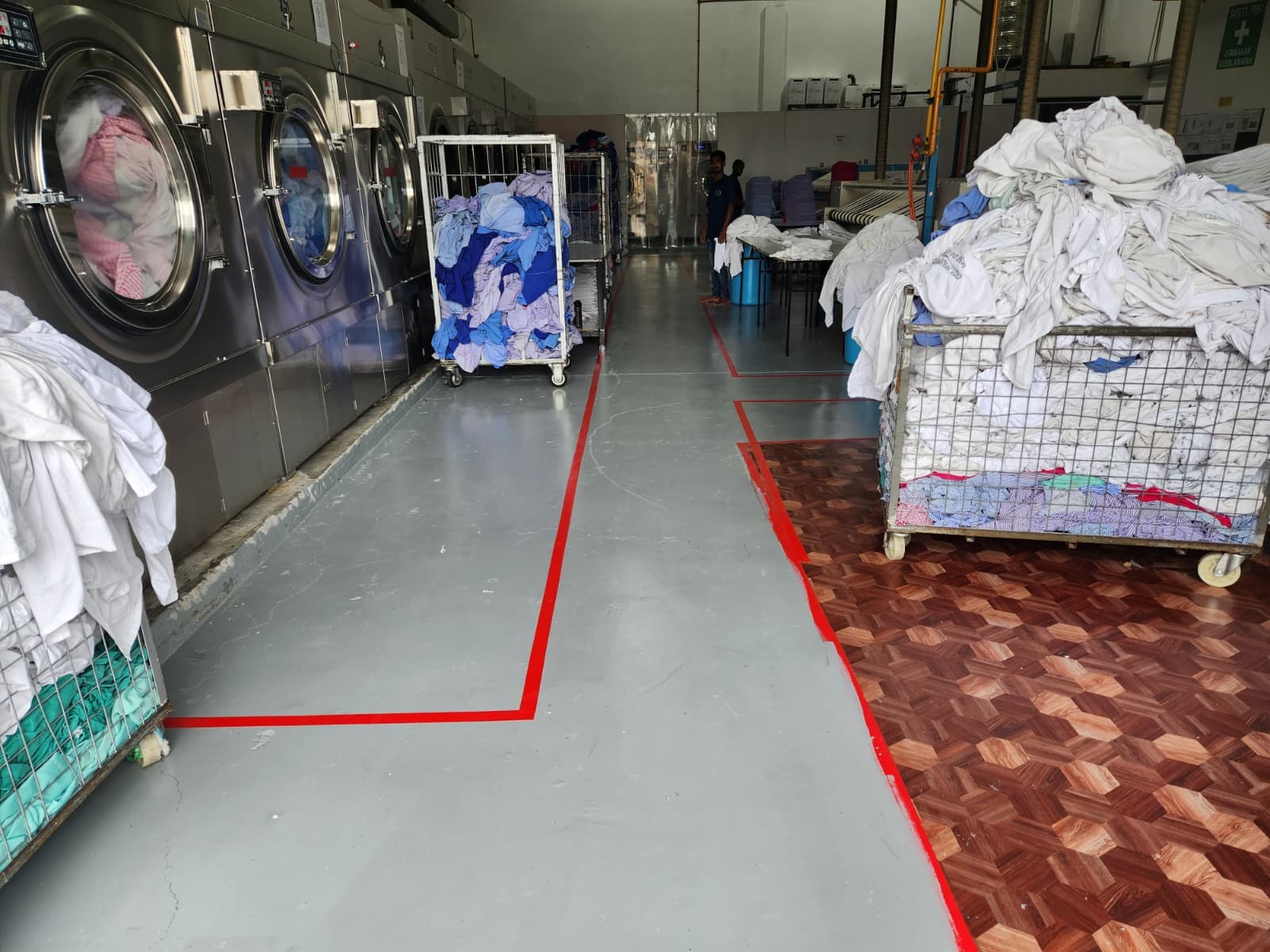
Most linen contamination problems start on the ward, not in the laundry. How a sheet is stripped, bagged, and moved decides whether the rest of the process stays clean or quietly works against you. This guide sets out practical ward linen handling steps that nursing and housekeeping teams in Johor can apply on every shift.
Strip and bag at the bedside
Used linen should be rolled, not shaken, and placed straight into a bag at the point of use. Shaking a sheet releases skin cells and microorganisms into the air and onto nearby surfaces. Bagging at the bedside also means contaminated items are contained before they travel anywhere near a corridor or another patient.
Segregate at source
Sorting linen is far safer when it happens at the bedside than later in a soiled room or at the laundry. Use a clear, consistent bagging scheme so general, infected, and heavily soiled items are separated from the first moment. This protects everyone downstream and avoids hand sorting of contaminated linen.
- →General used linen in the standard bag
- →Infected linen in clearly marked or water soluble bags
- →Heavily fluid soiled items contained to prevent leakage
- →Never overfill bags, tie them off before they are two thirds full
Trolley and transport discipline
Soiled linen trolleys and clean linen trolleys should never be the same trolleys or share the same route. Bags should be transported closed, and trolleys cleaned on a schedule. A clean delivery loses its value the moment it rides back on a trolley that just carried soiled bags.
Protect staff doing the handling
Staff handling used linen should wear gloves and an apron, perform hand hygiene after removing them, and avoid holding linen against their uniform. Used linen is treated as potentially contaminated regardless of the patient. Simple habits here prevent staff from becoming a transfer route between rooms.
Store clean linen properly
Clean linen should be stored off the floor, covered, and away from any soiled handling area, splashes, or dust. A clean store that doubles as a thoroughfare or sits next to the soiled room undoes the work done upstream. Stock should rotate so older clean linen is used first and nothing sits exposed for long.