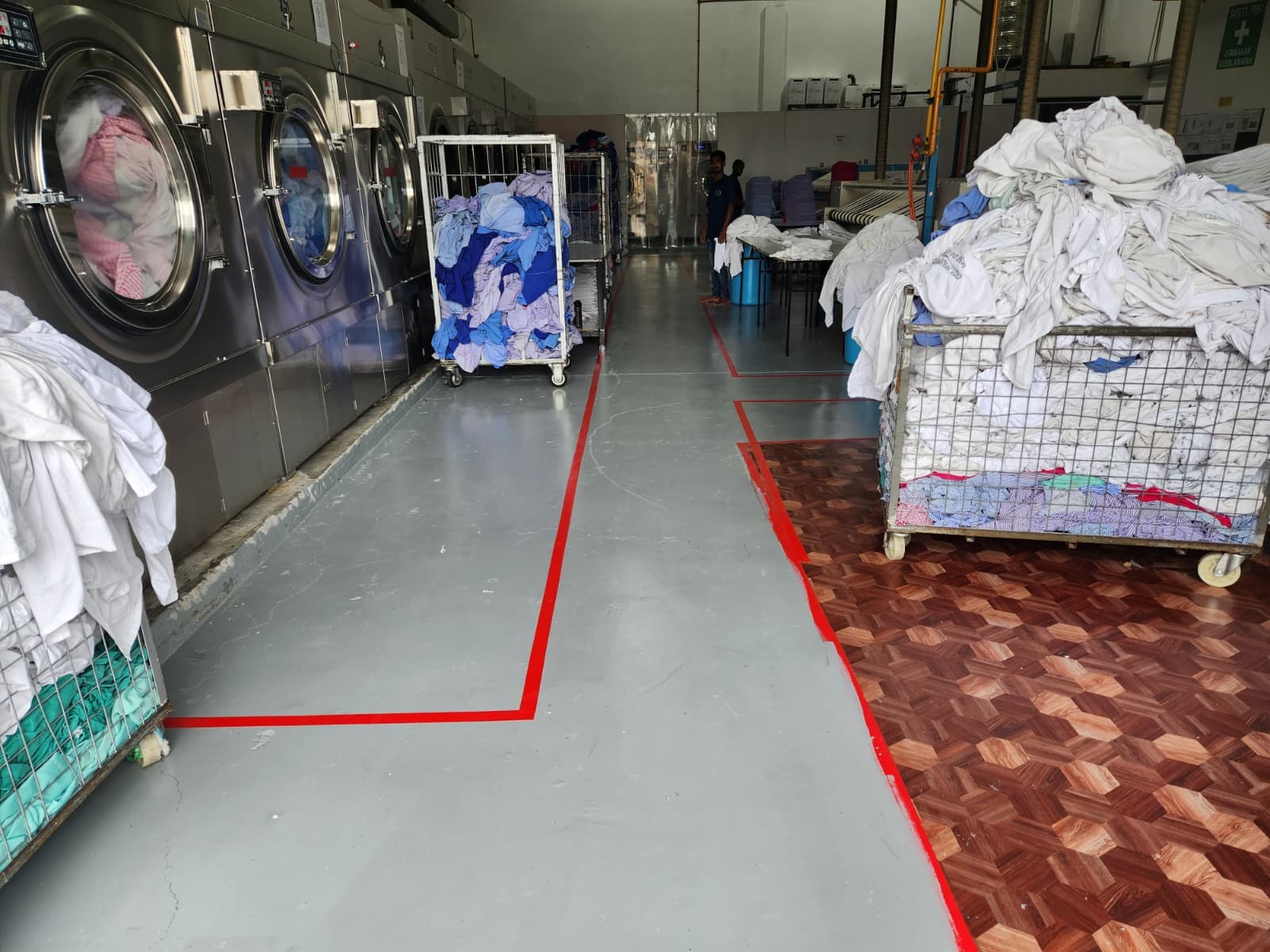
University and hostel laundry has a rhythm that catering and hotel work does not. Volume spikes hard at intake and move-out, dips during breaks, and runs steady in between, all while thousands of items pass through shared spaces. This guide covers how to plan that volume, keep linen from disappearing, and set up a vendor relationship that holds through the academic calendar.
What makes hostel laundry different from hotel laundry?
A hotel turns rooms daily with a fairly predictable occupancy curve. A hostel fills up in a few intense weeks, sits full for a semester, then empties for breaks. Your laundry partner needs to handle a large move-in surge of mattress protectors, pillowcases, and bedsheets, then settle into a lighter steady run for common-area and replacement linen.
- →Sharp peaks at intake and end of semester
- →Long flat periods during the term
- →Near-zero demand during long breaks
- →Mixed linen owners: campus stock plus student-held items
How do you forecast volume across the academic year?
Start from bed count, not guesswork. Multiply occupied beds by the linen set per bed, then by how often each set rotates. Map those numbers against your academic calendar so the laundry knows when a surge is coming and can stage machine time for it. A processor running large 100 kg machines can absorb intake peaks far more easily when the dates are shared in advance.
- →Beds multiplied by linen sets per bed
- →Rotation frequency per item type
- →Calendar overlay for intake, exams, and breaks
- →Buffer stock for damaged or lost replacements
How do you stop linen from going missing?
Loss is the quiet cost of hostel laundry. Shared corridors, students moving rooms, and end-of-term chaos all pull items out of circulation. The fix is counting at every handover and agreeing who owns what before the first wash. When clean and soiled linen are kept strictly apart and each collection is counted in and out, shrinkage becomes visible instead of guessed at.
- →Count linen at every pickup and delivery
- →Use par levels so you know what should exist
- →Separate campus-owned stock from student items
- →Reconcile counts monthly, not once a year
What hygiene standards should a campus expect?
Hostels concentrate people in close quarters, so linen hygiene is a health matter, not just an appearance one. Ask how clean and soiled streams are separated, what wash temperatures are used, and how finished linen is protected before it reaches the room. A processor that already serves hospitals carries those controls into hostel work as a matter of routine.
- →Strict separation of clean and soiled linen
- →Defined wash temperatures by item type
- →Protected storage and transport of finished stock
- →Clear handling for stained or contaminated returns
What should a hostel laundry contract include?
Write the calendar into the agreement. Define peak windows, turnaround during term, count reconciliation, and how replacements are handled when items are lost or damaged. Keep the scope to what the campus actually needs and confirm the processor has the capacity to cover your busiest week, not just an average one.