When you put hundreds of people into uniforms, the laundry stops being a chore and becomes a supply problem. If the rotation is sized wrong, you either run short on busy shifts or you tie up cash in sets that sit in a cupboard. This article walks through how to size a rotation, set par levels, and keep the cycle moving so the floor is always covered.
What does a rotation actually need to cover?
A rotation has to cover the people on shift, the sets in the wash, the sets in transit, and a buffer for growth and damage. The common mistake is to count only heads and forget that a meaningful share of stock is always away being cleaned. Work backwards from your busiest shift, not your average day, or you will run short exactly when you can least afford it.
- →People on the floor during peak shifts
- →Sets in the laundry cycle at any moment
- →Sets moving between site and laundry
- →A buffer for new hires and worn out items
How many sets per person is sensible?
Three sets per person is a practical baseline for a continuous operation: one worn, one clean and ready, one in the wash. Tighter than that and a single delayed collection leaves people without a clean uniform. Roles that soil heavily, such as kitchen or wet areas, often need more, while desk based staff can sit at the lower end.
How do par levels keep the floor covered?
A par level is the minimum clean stock you agree to hold for each size and role before more is pulled forward. Set a par per size band, not just a grand total, because an average across the whole team hides the fact that you have run out of larges while smalls overflow. Review par levels each quarter as headcount and the size mix shift.
Why does turnaround drive the whole plan?
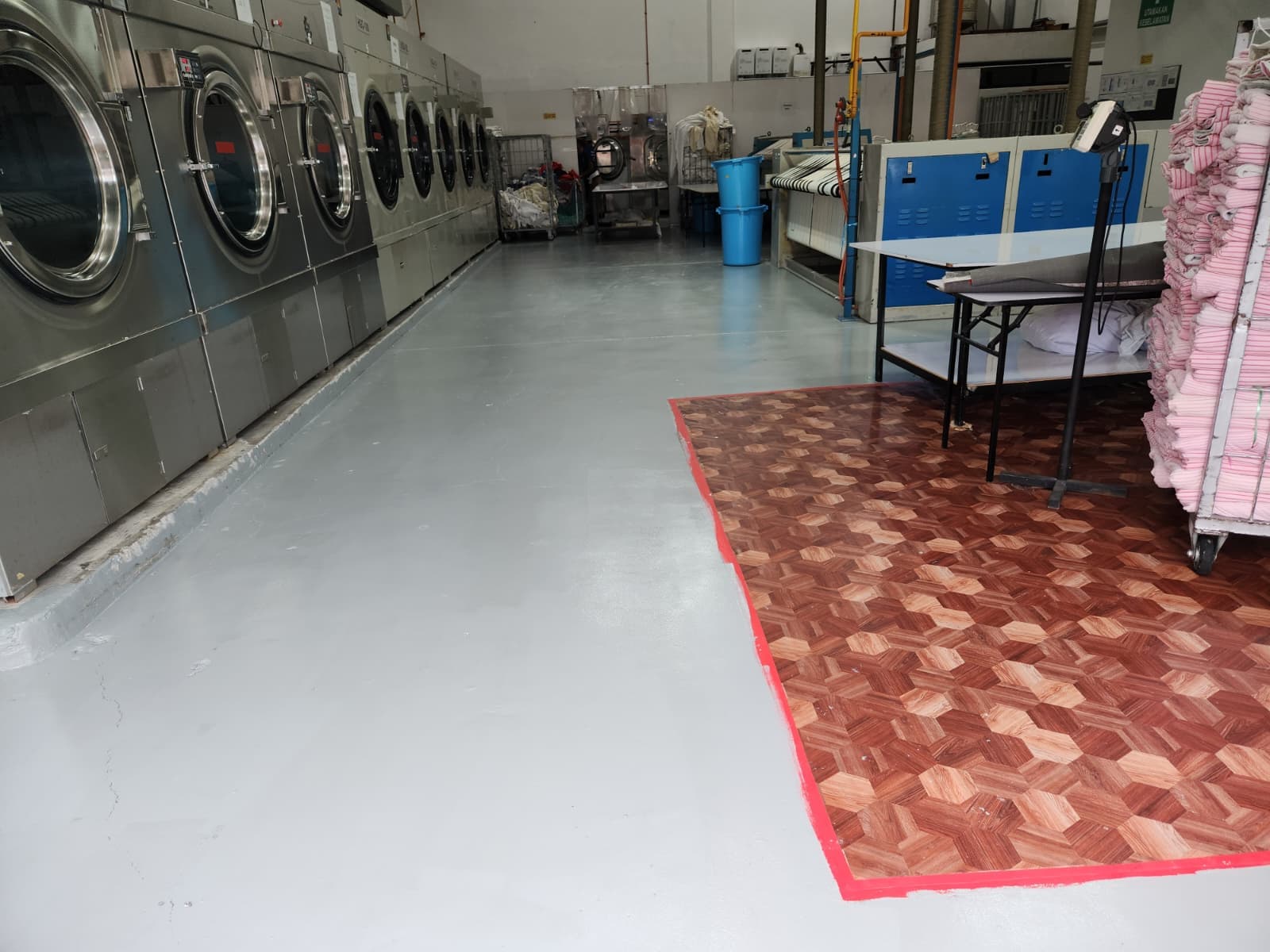
The faster and more reliable your laundry turnaround, the fewer spare sets you need to buy and store. A predictable daily collection lets you run leaner because stock spends less time out of circulation. Arifa runs two factories in Johor Bahru with capacity up to 25 tonnes a day, operating 24/7 since 2017, which is what makes a steady daily cycle realistic even for large teams.
How should you handle sizing and labelling?
For a large workforce, individual garment ownership is hard to sustain because people change roles, sizes, and shifts. A pooled system, where uniforms are issued clean by size rather than by name, is usually simpler to run at scale. Clear size labelling and a barcode or tag scheme make it easy to sort returns and track which bands are running thin.