The decision to keep laundry in-house or send it out is rarely settled by the headline price per kilogram. The real comparison is total cost of ownership, which counts every ringgit and every hour the function consumes, including the ones that never appear on an invoice. This article lays out both sides of the ledger so you can compare them honestly.
What total cost of ownership actually includes
Total cost of ownership is the full lifetime cost of doing the work, not just the visible spend. For laundry, that means capital, consumables, labour, utilities, maintenance, space, and the cost of failure when machines go down. An in-house operation that looks cheap on chemicals alone can be expensive once you add the floor space and the technician on call.
The in-house costs that hide in plain sight
Buying washers and dryers is the obvious cost, but it is rarely the largest one over time. Water and energy run every cycle, chemicals deplete, drums wear, and skilled labour has to be hired, trained, and covered for leave. Add the floor area the equipment occupies, which could otherwise earn revenue, and the in-house picture changes considerably.
- →Capital and depreciation on machines
- →Water, energy, and chemical consumption per cycle
- →Labour, training, and shift coverage
- →Maintenance, spares, and downtime
- →Floor space and ventilation infrastructure
The outsourced costs you still own
Outsourcing moves most of the burden off your books, but not all of it. You still hold linen stock, manage replacement, coordinate collection and delivery, and check quality on receipt. The honest outsourced budget is the processing rate plus those retained responsibilities, and pretending they vanish leads to a false comparison.
Where downtime risk really sits
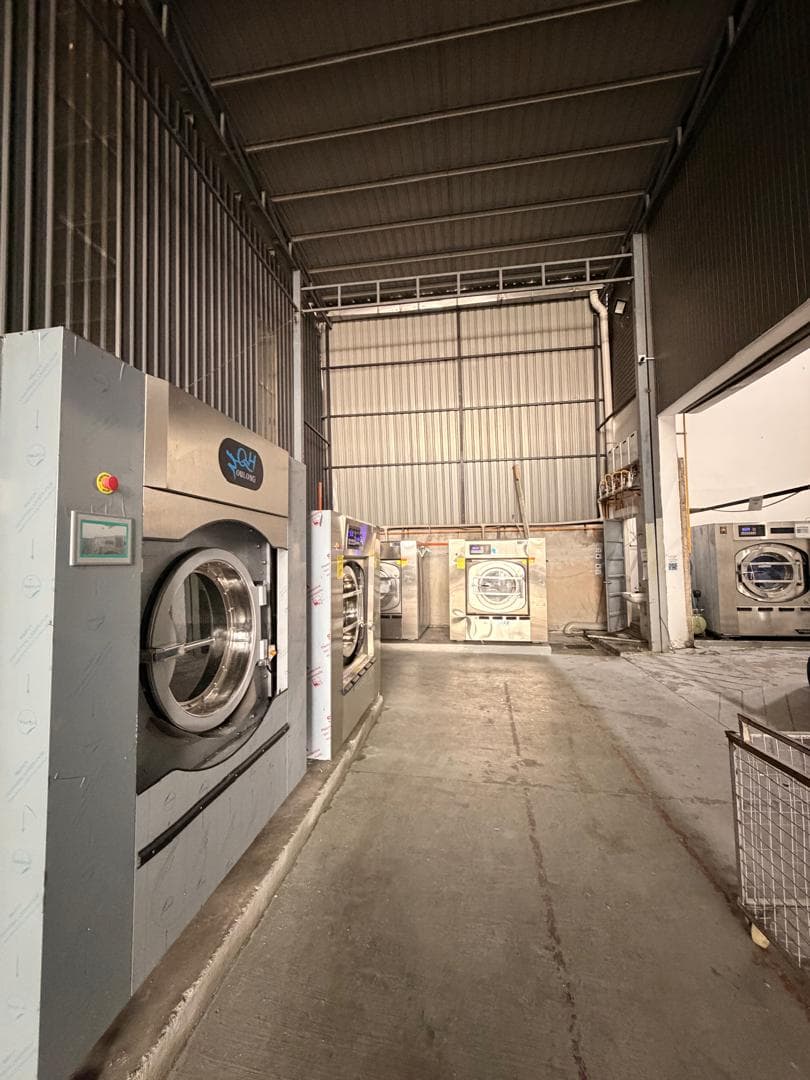
An in-house laundry that fails on a busy weekend is your problem to solve at speed, often by paying a premium for emergency help. A scaled processor absorbs that risk across redundant equipment and continuous shifts. Arifa runs nine washer extractors and sixteen dryers across two Johor Bahru factories and operates 24/7, so a single machine fault does not stop the linen moving.
How to run the comparison fairly
Put both options in the same format: total annual cost divided by annual volume, with every category filled in for both. If an in-house line is empty, you have probably forgotten a real cost rather than found a free one. The clearer your inputs, the less the decision rests on gut feel.
- →Use the same volume figure for both options
- →Fill every cost category for in-house, not just the easy ones
- →Include the cost of failure and emergency cover
- →Compare cost per kg or per piece, not totals