Turnaround time decides how much linen you need to own and how often a missed delivery turns into an empty shelf. Some sites genuinely need linen back the same day, while others run smoothly on a next-day cycle with the right par stock. This article walks through how to tell which one your operation actually needs.
What turnaround time really measures
Turnaround time is the gap between linen leaving your loading dock soiled and arriving back clean and ready to use. It is not just wash time. It includes pickup scheduling, sorting, washing, drying, finishing, quality checks, and the return trip.
- →Collection window from your site
- →Processing time inside the plant
- →Finishing and inspection
- →Return delivery slot
When same-day turnaround makes sense
Same-day works when your linen par level is tight and you cannot hold a full extra day of stock on site. It also suits sudden demand spikes, like a hotel running near full occupancy or a ward with high patient turnover. The trade-off is that it depends on early pickup and reserved plant capacity, so it needs to be planned, not assumed.
- →Low on-site par stock
- →High occupancy or bed turnover
- →Limited storage for clean linen
- →Predictable early-morning collection
When next-day is the better fit
Next-day turnaround is the steady default for most commercial sites. With a sensible par level, usually around two to three sets in rotation, you always have clean linen on the shelf while yesterday's load is being processed. It smooths out demand and gives the plant room to inspect and rewash anything that fails the first check.
- →Comfortable par stock on site
- →Steady, predictable usage
- →Room to absorb a delayed delivery
- →Lower pressure on collection timing
How par stock changes the decision
Par level and turnaround are two sides of the same equation. If you hold more linen, you can run a relaxed next-day cycle and absorb the odd hiccup. If you hold less, you lean harder on fast turnaround and accept that any delay is felt immediately. The right answer balances the cost of owning more linen against the cost of a faster, more tightly scheduled service.
- →More par stock means more flexibility
- →Less par stock means tighter timing
- →Mixed sites can use different cycles per item
Building turnaround you can rely on
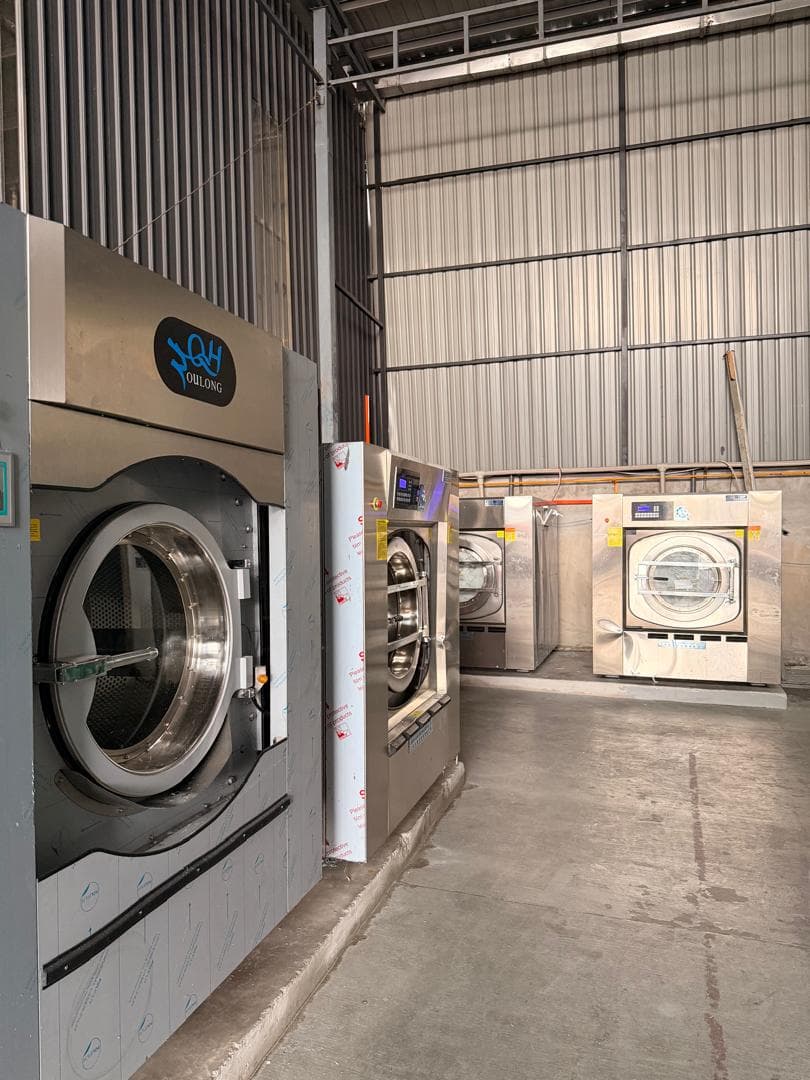
Reliable turnaround depends on capacity headroom, not just speed on a good day. Arifa runs nine washer extractors, sixteen dryers, and 100 kg machines across two Johor Bahru factories, operating 24/7 since 2017, which is what lets us hold same-day slots for sites that need them. The practical step is to map your busiest day, agree pickup and delivery windows, and confirm there is spare capacity to cover a surge.