Oil and grease are the hardest soils to shift from factory workwear, and a normal wash rarely touches them. For plants around Pasir Gudang and Senai, that means uniforms that look grey and smell stale within weeks. This guide explains why grease clings, what actually removes it, and how a commercial laundry process protects the garment while it cleans.
Why oil and grease resist a normal wash
Oil is hydrophobic, so it repels water and refuses to rinse away on its own. It also bonds with polyester fibres and sits inside the weave, which is why a domestic machine just smears it around. Add carbon, metal dust, and coolant on top and you have a soil load that needs heat, the right chemistry, and time, not just more detergent.
- →Oil repels water and will not rinse out alone
- →Polyester holds oily soil tighter than cotton
- →Carbon and metal dust grind into the weave
- →Cold, short washes leave grease behind
The chemistry that actually lifts grease
The job is done by surfactants and emulsifiers that break oil into tiny droplets so water can carry them away, supported by alkaline builders that loosen the bond between soil and fibre. Temperature matters because warm water softens grease and makes the chemistry work faster. The mix has to be matched to the fabric so it strips the oil without stripping colour or coating.
- →Surfactants emulsify oil into rinseable droplets
- →Alkaline builders break the soil-to-fibre bond
- →Controlled heat softens grease for faster removal
- →Dosing tuned to fabric, not a single recipe
Why classification and pre-treatment come first
Heavily soiled garments are sorted and pre-treated before the main wash so grease does not transfer onto lighter items. At Arifa we keep clean and soiled linen strictly apart through the whole process, which stops cross-contamination between batches. Spot treatment on collars, cuffs, and front panels deals with the worst patches before the load even hits the washer.
- →Sort by soil level so heavy grease stays separate
- →Pre-treat collars, cuffs, and front panels
- →Soiled and clean linen never share a path
- →Worst stains addressed before the main wash
Equipment built for heavy soil loads
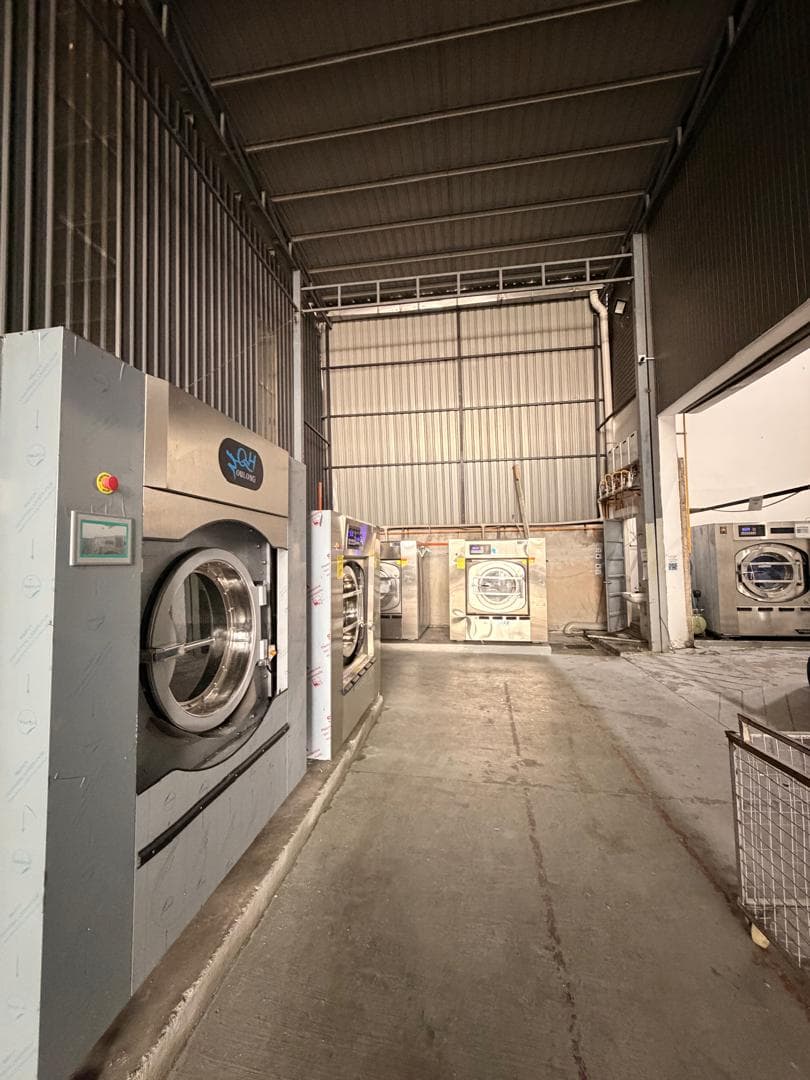
Industrial washer extractors hold the mechanical action and high extraction speeds that a domestic machine cannot match, which is what flushes loosened grease clear of the fabric. Arifa runs nine washer extractors with 100 kg machines and sixteen dryers across two Johor Bahru factories, processing up to 25 tonnes a day. That capacity means heavily soiled uniforms get a full wash cycle instead of a rushed compromise.
Protecting garment life while removing grease
Aggressive cleaning can fix a stain and destroy a uniform at the same time, so the process balances soil removal against fabric wear. Correct dosing, controlled temperature, and proper drying keep seams, prints, and high-visibility coatings intact. Over a fleet of uniforms, that balance is the difference between replacing workwear every few months and getting full service life out of it.