When linen turnaround is slow, the symptoms show up everywhere: rooms held back, wards short of stock, and bigger par buffers tying up money. The cause is rarely one thing, it is usually friction spread across collection, washing, finishing, and delivery. This article breaks turnaround into its parts so you can see where time is really lost and what to do about it.
What does turnaround time actually include?
Turnaround is not just the wash. It is the full loop from the moment soiled linen leaves your site to the moment clean linen comes back ready to use. Collection, sorting, washing, drying, finishing, packing, and delivery each add time, and a delay in any one of them holds up the whole cycle.
- →Collection and transport to and from the laundry
- →Sorting, washing, drying, and finishing
- →Packing, staging, and return delivery
How does predictable volume speed things up?
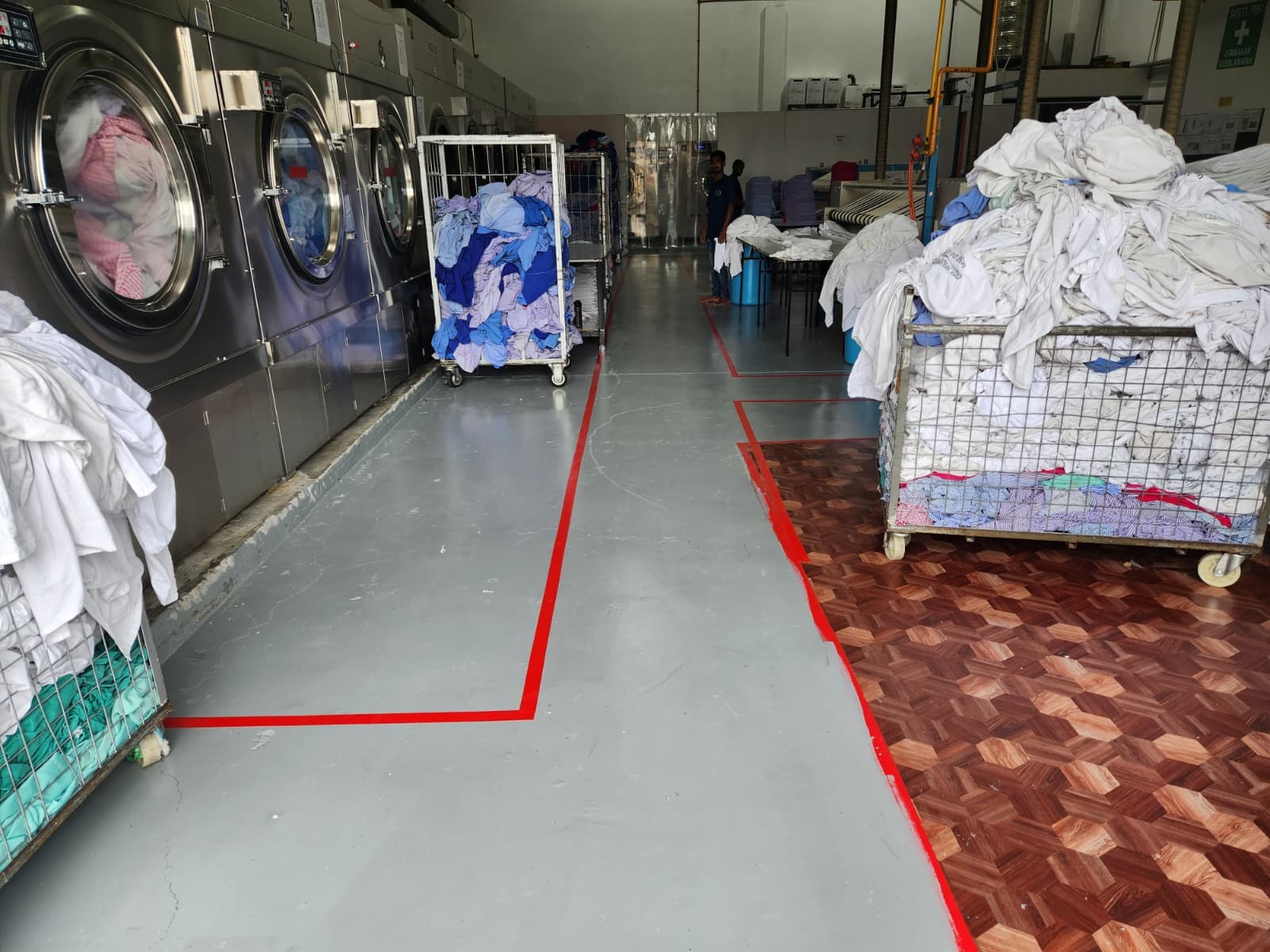
A laundry runs fastest when it can plan. Sudden surges force rescheduling and queueing, while a steady, forecast flow lets machines and shifts be loaded efficiently. Arifa runs nine washer extractors, sixteen dryers, and 100 kg machines across two Johor Bahru factories, operating 24/7, but that capacity works best when client volumes are shared ahead of time rather than arriving as a spike.
- →Share known busy periods and events in advance
- →Keep collection schedules consistent week to week
- →Flag one off bulk loads early so they can be slotted in
Where does sorting slow the process down?
Linen that arrives mixed, with foreign objects, or wrongly counted has to be untangled before washing can start. Good habits at your end, like separating heavily soiled items and removing pins, clips, and rubbish, save real time downstream. Clear, accurate counts on collection also remove the back and forth of reconciling figures later.
- →Remove foreign objects before linen is bagged
- →Separate heavily soiled or stained items so they can be pre treated
- →Send accurate counts with each collection
Does carrying more stock help or hide the problem?
A bigger par buffer does smooth over slow turnaround, but it ties up cash and storage and lets the underlying delay go unfixed. The better goal is a turnaround reliable enough that you can run on a sensible par rather than a bloated one. Reliability, not just speed, is what lets you safely carry less.
- →Right size par to real demand, not worst case fear
- →Track how often you run short to find the true buffer needed
- →Reduce buffer only once turnaround is consistently reliable
How do collection and delivery windows affect the loop?
If soiled linen is only collected once a day and returned once a day, the schedule itself sets a floor on turnaround no matter how fast the wash is. Aligning collection and delivery windows with your real peaks, and keeping them consistent, often shaves more time than any single change inside the plant. Talk through your service pattern with your laundry partner so the schedule fits how your site actually runs.