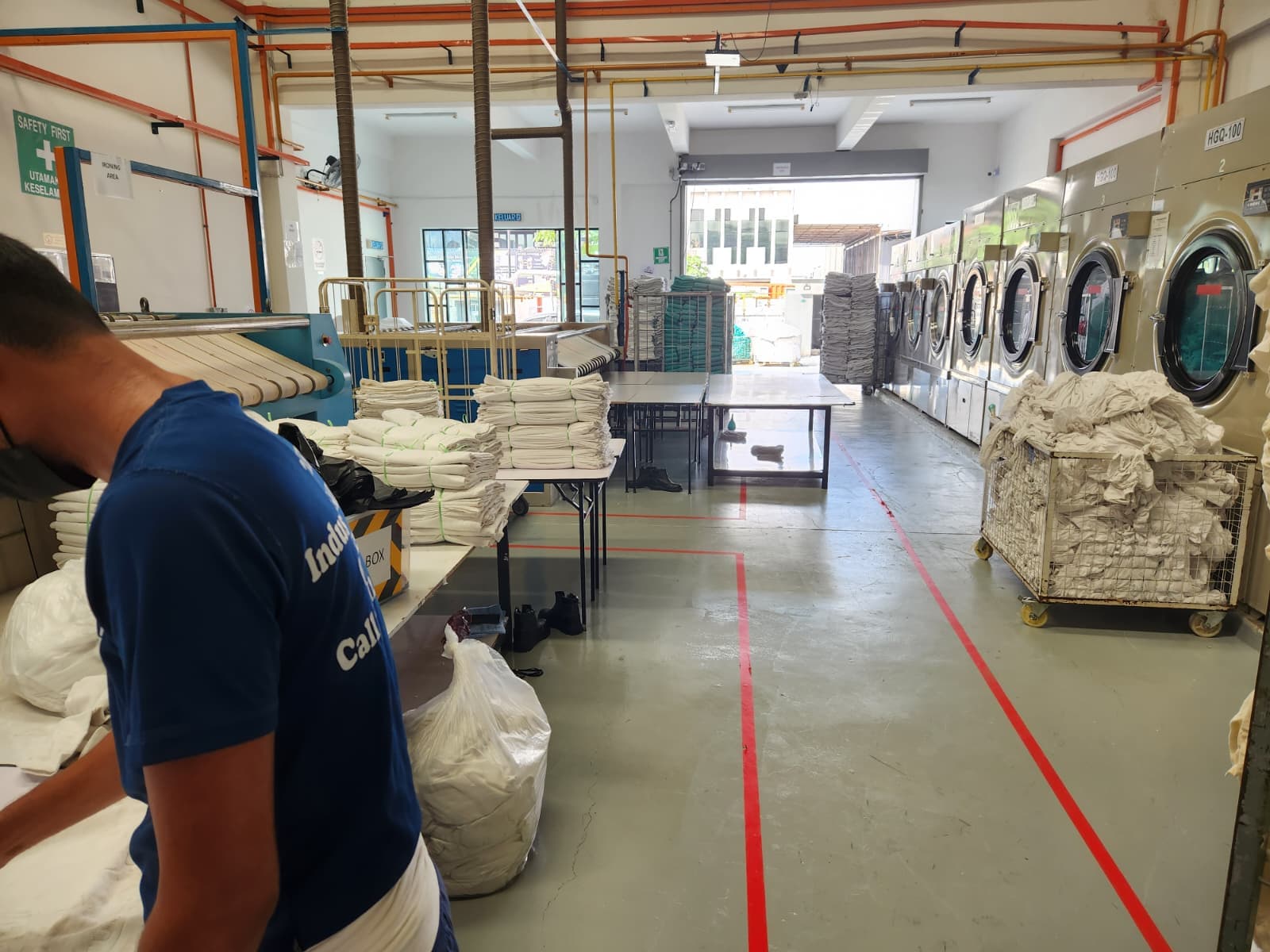
Most linen that gets thrown out is not worn out, it is stained beyond rescue. By the time a marked sheet reaches the laundry, the damage is often already set. This guide focuses on what your team can do at the source, in the room, the kitchen, and the collection point, to cut stains before they become permanent.
Why stains start before the wash
A stain that sits for hours or days has time to oxidise, set, and bond with the fibre, which makes it far harder to remove later. The laundry can do a great deal, but it cannot reverse a mark that has been baked in by time or heat. The cheapest stain to remove is the one that never had a chance to set.
Common stain sources and how to cut them
A handful of culprits cause most linen losses, and each has a simple front-line fix. Knowing where they come from lets your team act before the linen leaves the floor.
- →Blood and fluids: rinse or flag promptly, never let them dry in
- →Coffee, tea, and wine: separate and tag rather than pile wet
- →Massage oil and lotion: bag oily items apart from flat linen
- →Make-up and self-tan: provide dark face cloths to absorb the worst
- →Iron scorch: check press temperatures so heat does not set marks
Handling at collection and sorting
How linen is collected shapes how much of it survives. Wet items left bundled with dry ones spread stains and breed odour, while fresh marks left to dry become permanent. Simple habits at the collection point protect linen long before it reaches a machine.
- →Keep wet and dry linen apart in collection
- →Tag known stains so the plant can pre-treat them
- →Send soiled linen promptly rather than letting it sit
Don't let heat set the stain
Heat is a stain's best friend. A protein or oil mark that goes through a hot wash or a hot press before treatment can be locked in for good. That is why flagging stains matters: it lets the laundry treat the mark first, before any heat step, so the fibre is given the best chance to come clean.
Working with your laundry to recover more
Source control and plant treatment work together, not in competition. When your team flags problem items and sends them promptly, a plant like Arifa can target the right pre-treatment instead of guessing. The result is more linen recovered, fewer write-offs, and a longer life from every sheet and towel.