A commercial laundry is energy and water intensive by nature, so its footprint is real and worth managing. The good news is that the biggest contributors are well understood, which means effort can go where it counts rather than into token gestures. This article maps where the footprint comes from and the practical levers that reduce it.
Where does a laundry's footprint come from?
Most of the load sits in heating water, drying linen, and moving it to and from sites. Washing needs heated water and chemistry, drying needs sustained heat, and transport adds fuel on top. Knowing this split tells you that energy and water are where the real gains are, not the small stuff.
- →Heating water for washing
- →Heat for drying and finishing
- →Fuel for collection and delivery transport
How does load efficiency reduce energy use?
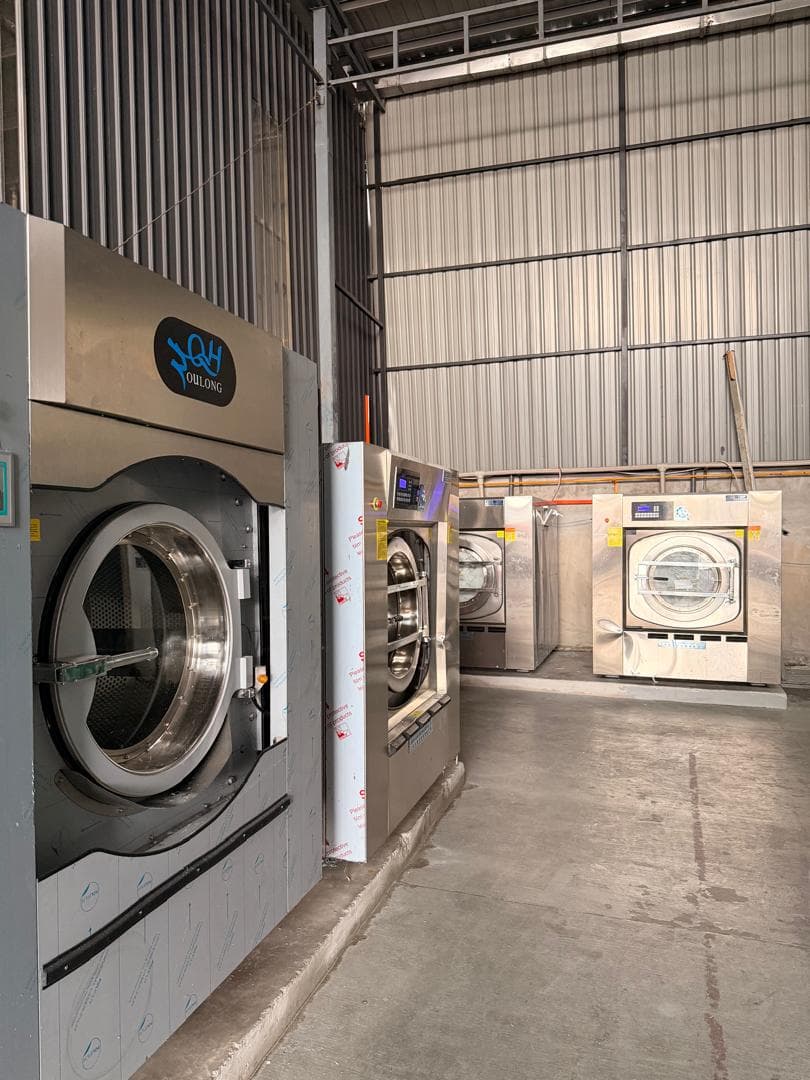
A machine uses a similar amount of energy whether it runs full or half empty, so part loads are pure waste. Running washers and dryers at their rated capacity spreads that fixed energy over more linen and lowers the footprint per kilogram. Arifa's 100 kg machines and sixteen dryers are sized for volume, and they pay off most when they run properly loaded.
- →Wash and dry at rated load weights, not part loads
- →Avoid running machines for small odd batches
- →Schedule loads so capacity is used fully
Can heat and water be recovered?
A lot of energy leaves a laundry as hot wastewater and warm exhaust air. Heat recovery captures some of that to pre warm incoming water, so less fresh energy is needed to reach wash temperature. Water reuse, where appropriate and within hygiene limits, similarly cuts the volume drawn fresh. These systems suit the steady, high volume running of a plant like Arifa's two Johor Bahru factories.
- →Recover heat from hot wastewater and exhaust
- →Pre warm incoming water to cut heating demand
- →Reuse suitable water streams within hygiene limits
How does transport factor in?
Every collection and delivery run burns fuel, so the route and the loading matter. Full vehicles on planned routes move more linen per trip than half empty ones on ad hoc runs. Consolidating schedules and grouping nearby sites in Johor Bahru, Pasir Gudang, and Senai reduces the trips needed for the same volume.
- →Plan routes to group nearby sites
- →Load vehicles fully rather than running half empty
- →Consolidate ad hoc trips into scheduled runs
Does washing at the right temperature help?
Heating water is one of the largest energy demands, so washing no hotter than the linen needs saves directly. Hospitality linen often cleans well below the temperatures clinical linen requires, so matching temperature to the load avoids wasting heat on items that do not need it. The rule is to meet hygiene first and then not exceed it without reason.
What about linen life and the upstream footprint?
The footprint of linen is not only in washing it, it is also in making and replacing it. Linen that wears out fast has to be manufactured and shipped again, carrying its own embedded carbon. Gentle, correct processing that extends linen life therefore reduces the upstream footprint as well as the wash footprint, which is why care and replacement are linked.