A coverall is protective equipment, not just a uniform, so its cleaning is a safety task as much as a hygiene one. For manufacturers in Johor Bahru and Pasir Gudang, a poorly cleaned coverall can carry contaminants back onto the floor or lose the very protection it was bought for. This guide covers why coverall hygiene is different, what a proper process looks like, and how to keep PPE fit for reuse.
Why coverall hygiene is a safety issue
Coveralls absorb whatever the worker is exposed to, from dust and chemicals to oils and biological soil, and a half-clean garment carries that load back into the workplace. Worse, residue left in the fabric can degrade the material and weaken the protection it was chosen for. Treating coverall cleaning as routine laundry misses the point: the goal is a garment that is both hygienic and still protective.
- →Coveralls trap dust, chemicals, oils, and soil
- →Residue can degrade the protective fabric
- →Half-clean PPE spreads contamination
- →Hygiene and protection have to survive the wash
Separating clean and soiled coveralls
The single biggest hygiene risk in PPE laundering is letting soiled garments touch clean ones. Arifa keeps clean and soiled linen strictly apart across the whole workflow, with separate handling so a freshly washed coverall never crosses paths with an incoming dirty one. That barrier matters more for PPE than for ordinary uniforms because the contaminants involved can be hazardous.
Matching the wash to the contaminant
Coveralls from a food line, a metalworking shop, and a chemical plant carry different soils and need different processes. The right approach starts with knowing what the garment is exposed to, then setting temperature, chemistry, and cycle length to suit. A one-size wash either leaves contaminants behind or overcleans and shortens garment life.
- →Identify the contaminant before choosing the cycle
- →Oil and grease need emulsifiers and heat
- →Chemical residue needs careful neutral rinsing
- →Cycle tuned to the soil, not a fixed default
Protecting the protective properties
Many coveralls carry coatings or treatments such as flame resistance or anti-static finishes, and the wrong chemistry strips them out. Correct dosing and controlled drying preserve those properties so the garment still does its job after cleaning. This is why industrial PPE belongs with a laundry that controls its process rather than a general-purpose wash.
Capacity and turnaround for a coverall fleet
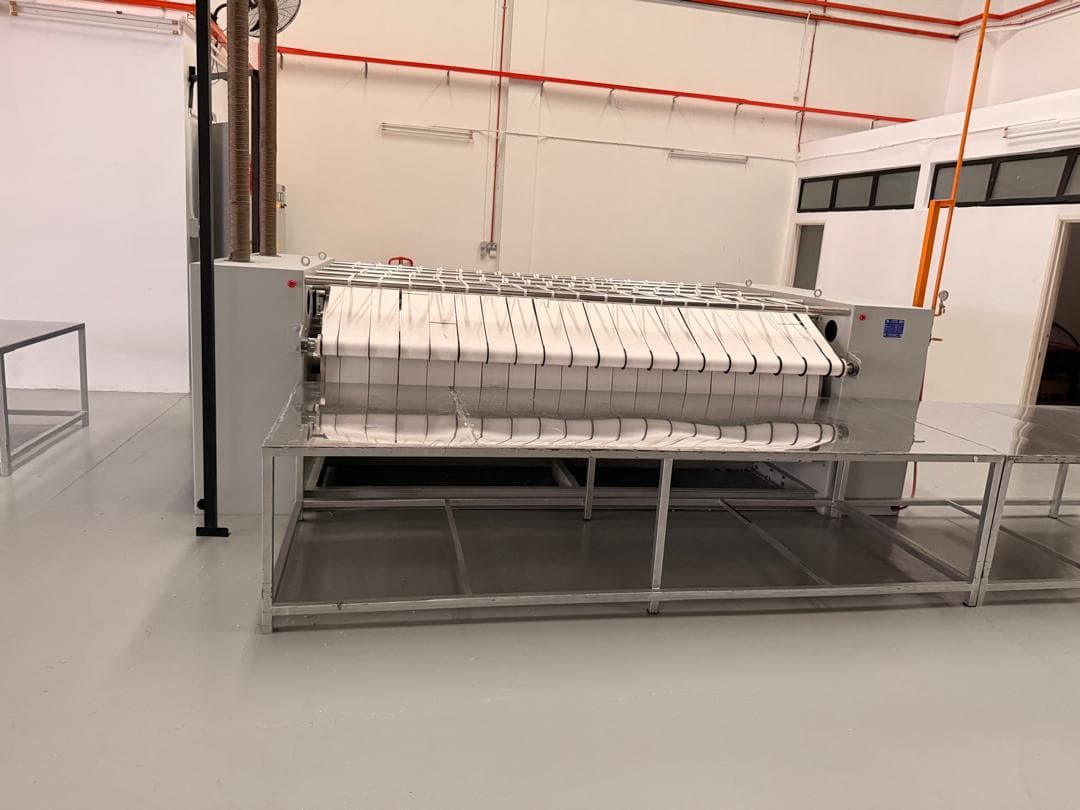
Manufacturers rotate large numbers of coveralls and cannot afford a slow turnaround that leaves crews short. Arifa operates 24/7 across two Johor Bahru factories with capacity up to 25 tonnes a day, so a coverall fleet can cycle through cleaning and back to the floor on a reliable schedule. Consistent turnaround keeps every shift in clean, protective PPE.