Logistics and warehousing run on shifts that never really stop, and the uniforms take a beating from grease, dust, and constant movement. A laundry partner that suits a quiet office will struggle with hi-vis that has to stay visible and overalls that come back heavily soiled. This article looks at what warehouse uniform laundry actually has to handle and how to set it up so crews are always kitted out.
What makes warehouse uniforms harder to clean?
Warehouse and logistics garments collect grease, oil, dust, and ground-in dirt that a standard domestic-style wash cannot shift. They also include hi-vis vests and trims where the whole point is that the colour and reflective strips stay bright and intact. The cleaning has to remove heavy soil without destroying the visibility that keeps people safe.
How is hi-vis handled without ruining it?
Hi-vis relies on fluorescent fabric and reflective tape, both of which degrade if washed too hot or too aggressively. Heavy soiling has to be removed at a temperature and chemistry that cleans the cloth without dulling the reflective strips. Sorting hi-vis from heavily greased overalls also stops grime from settling back onto the bright fabric.
- →Separate hi-vis from the dirtiest overalls
- →Avoid overly harsh bleaching that dulls fluorescent colour
- →Control temperature to protect reflective tape
- →Inspect reflective strips on return for wear
Can a laundry keep up with round-the-clock shifts?
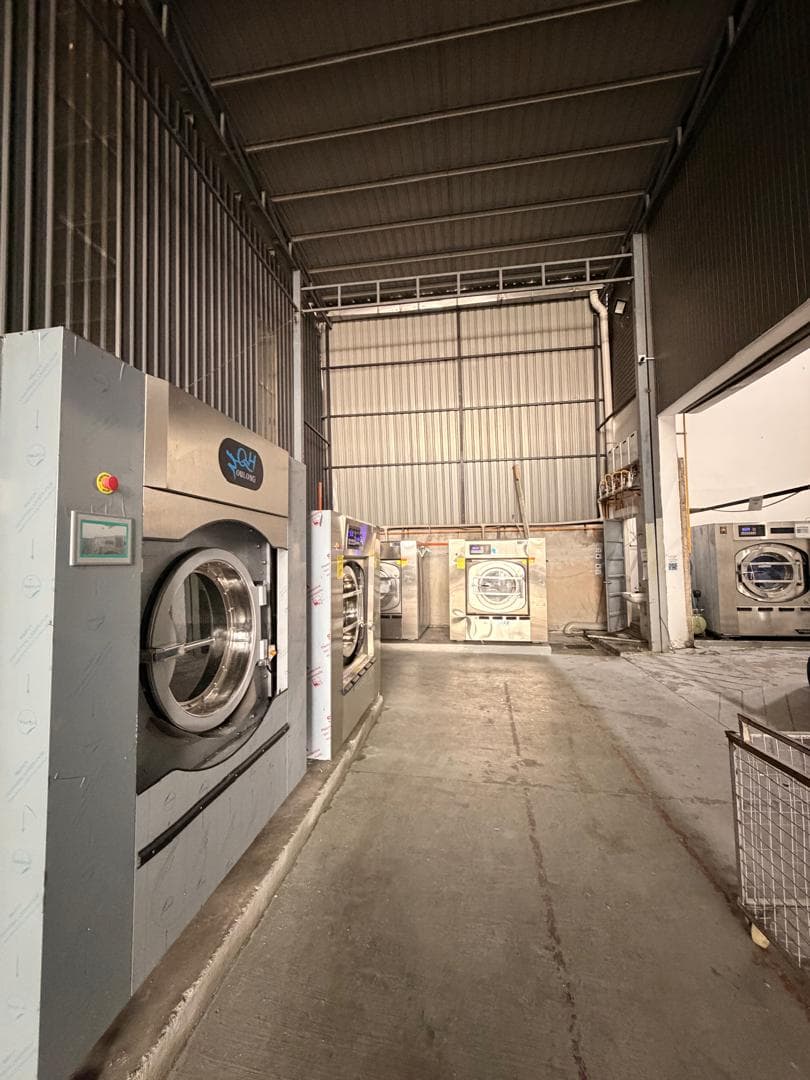
Logistics often runs day and night, so the laundry behind it has to keep a steady cycle rather than working office hours. Arifa has operated 24/7 since 2017 across two Johor Bahru factories, with capacity up to 25 tonnes a day. That continuous capacity is what lets a daily collection and return cycle line up with shift patterns instead of fighting them.
Why does keeping clean and soiled stock apart matter here?
Warehouse soil is heavy, so the risk of recontaminating clean uniforms is real if the flow is not controlled. Arifa keeps clean and soiled linen strictly apart as a standing process, so freshly washed overalls do not pick up grease from the incoming pile. For logistics teams this means the uniforms that go back out are genuinely clean, not just rinsed.
How do you size cover for a logistics team?
Shift-based operations need enough sets that the next shift always has clean uniforms while the last shift's are still in the wash. Size against the busiest shift and the dirtiest roles, and hold a buffer for new hires and damaged items. A reliable daily turnaround lets you run that buffer leaner because stock returns quickly.