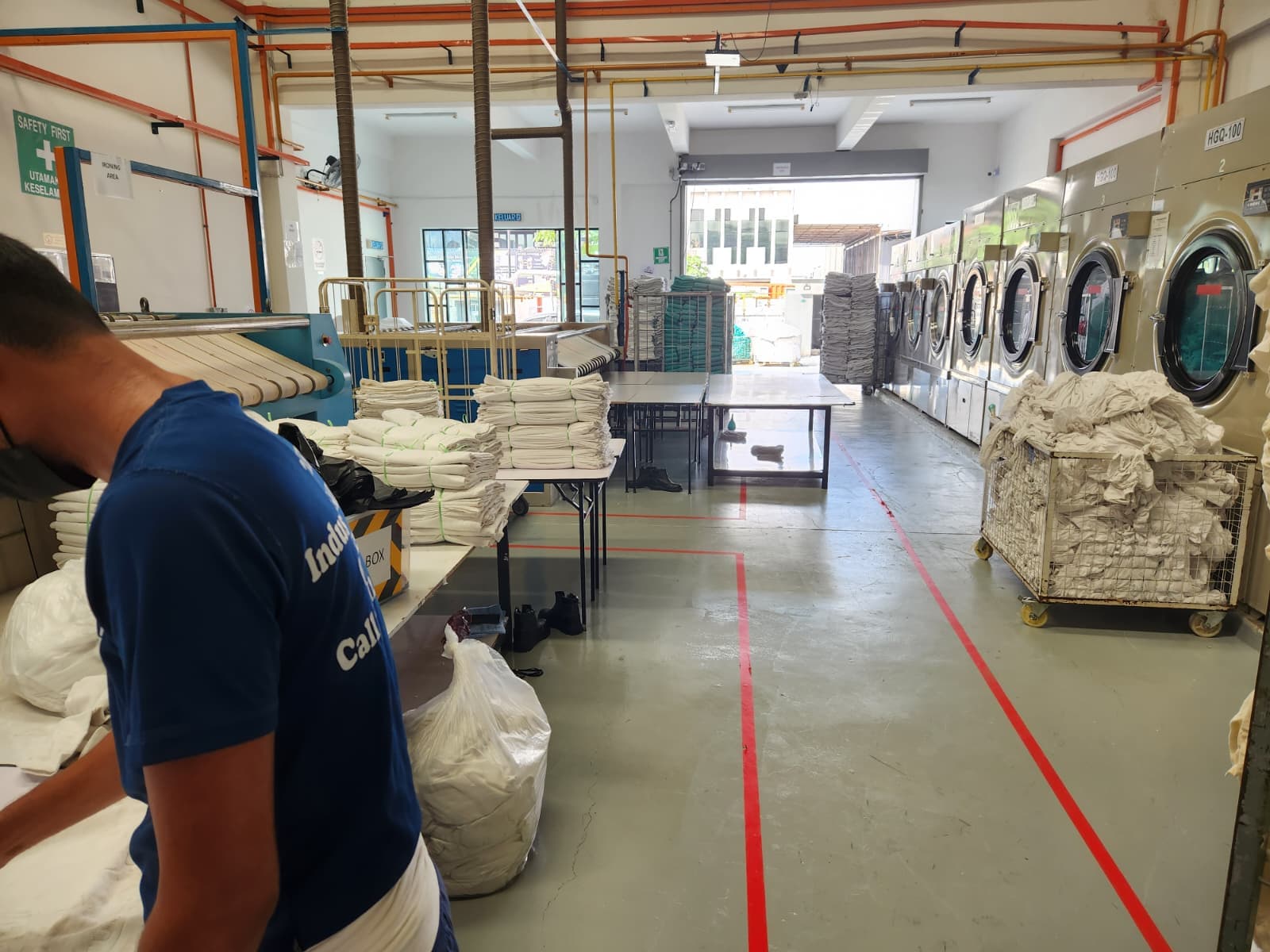
Clean linen that has been washed, dried, and finished can still be ruined by the way it is stored. Damp shelves, mixed soiled and clean stock, and poor stock rotation all quietly add cost and risk in a busy hotel or hospital. This article sets out the storage habits that keep linen fit to issue and reduce the amount that has to be rewashed.
Why does linen storage matter so much?
Linen spends far more time on a shelf than it does in a machine. A single sheet might be washed in under an hour but sit in storage for days before it is needed. If that storage is humid, dusty, or shared with soiled items, the work done in the wash is undone, and the linen has to go back through the whole cycle.
- →Rewashing burns water, energy, and labour for no benefit
- →Musty or marked linen damages guest and patient trust
- →Poor rotation lets some stock age while other stock sits unused
How should clean and soiled linen be separated?
Clean and soiled linen should never share the same space, the same trolley, or the same air flow. At Arifa's two Johor Bahru factories the two are kept strictly apart through the whole process, and the same discipline should carry into any hotel or hospital store. Soiled linen carries moisture and contamination that will transfer to clean stock if they are kept close together.
- →Use separate rooms or clearly zoned areas for clean and soiled
- →Never stage returning soiled linen near issued clean stock
- →Keep dedicated trolleys for each and do not swap them
What conditions keep stored linen in good shape?
Linen holds up best in a cool, dry, well ventilated space away from direct sun and water sources. Shelving should be off the floor and clear of walls so air can move and spills cannot wick up. Keep stores closed to dust and pests, and avoid stacking so high that lower items are crushed or forgotten.
- →Keep shelves off the floor and away from damp walls
- →Control humidity and ventilation to prevent musty odours
- →Shield linen from direct sunlight to protect fibres and colour
How does stock rotation reduce waste?
Without rotation, the easiest items to reach get used over and over while others sit untouched and age unevenly. A first in, first out approach evens out the wear across the whole stock so the linen ages as one pool rather than in patches. Issue from the front, restock from the back, and the rotation takes care of itself.
- →Restock from behind so older linen is issued first
- →Label or date deliveries when batches arrive together
- →Pull damaged items out of rotation as soon as they are spotted
What about par levels and counting?
A clear par level, the amount of each item you need on hand to run service, tells you how much to store and when to reorder. Counting against par regularly catches shrinkage early and stops both shortages and over ordering. It also gives your laundry partner a steady, predictable flow to plan around rather than last minute surges.