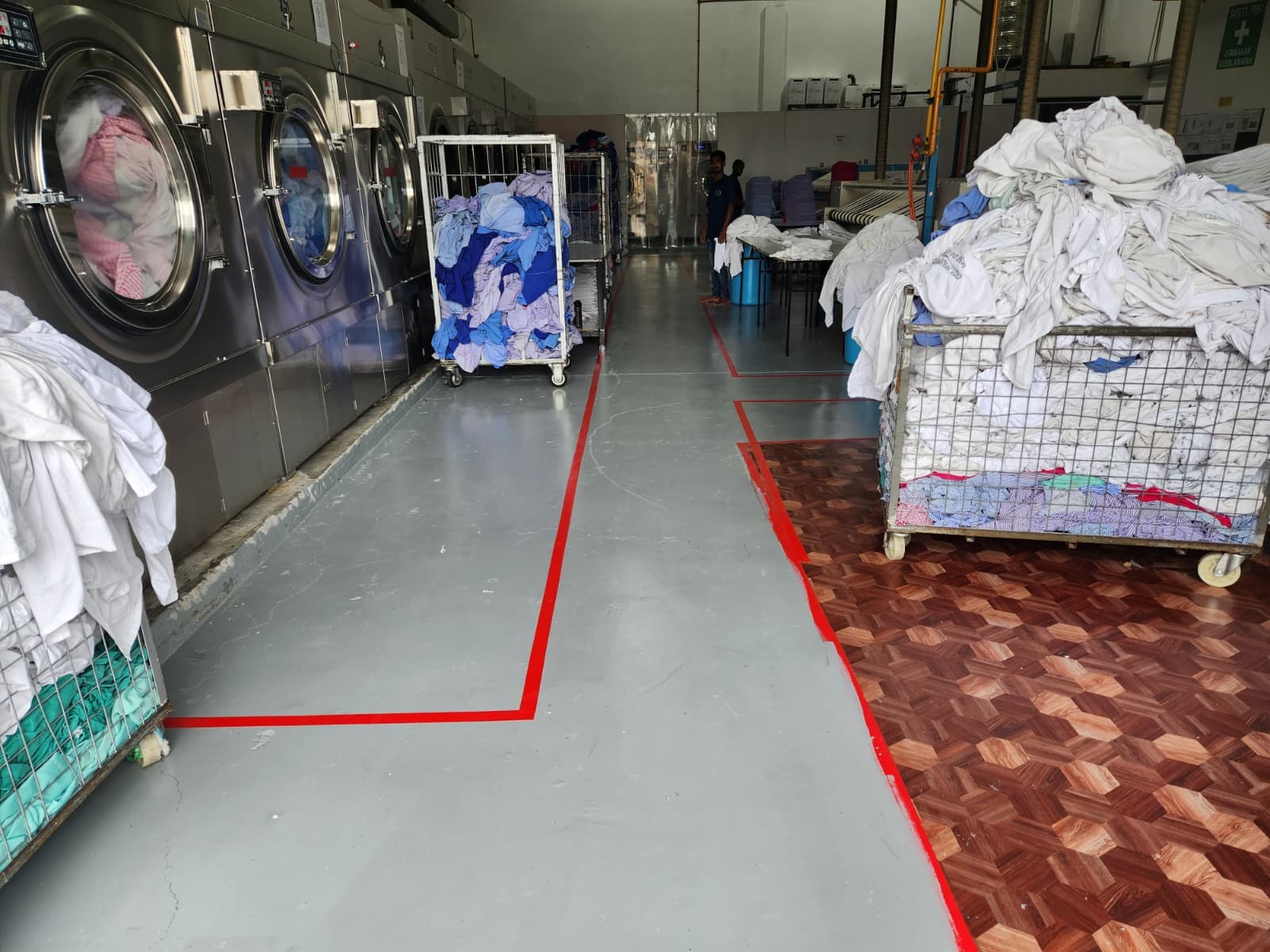
Most people see only two ends of the laundry process: dirty linen going out and clean linen coming back. In between sits a controlled flow with several checkpoints, each one protecting cleanliness and quality. This article walks the whole path so you know what actually happens to your linen.
Collection and intake
The flow starts at your loading dock, where soiled linen is collected on an agreed schedule and brought to the plant. From the moment it arrives, it enters the soiled side and is kept apart from anything clean. At Arifa, clean and soiled linen are strictly separated across two Johor Bahru factories, so the two streams never cross.
- →Scheduled pickup from your site
- →Logged at intake by type and source
- →Routed straight into the soiled stream
Sorting before the wash
Before anything is washed, linen is sorted by item type, fabric, and soil level. This is what lets each load get the right wash program instead of a one-size-fits-all cycle. Heavily soiled or stained pieces are separated so they can be treated properly rather than dragging down a normal load.
Washing and drying
Sorted loads move into the washer extractors, where temperature, chemicals, and cycle time are matched to the linen type. Arifa runs nine washer extractors and 100 kg machines feeding sixteen dryers, which is what carries up to 25 tonnes of throughput a day. The scale matters because it keeps the flow moving without bottlenecks between wash and dry.
- →Wash program matched to linen type
- →100 kg machines for high-volume loads
- →Sixteen dryers keeping the line moving
Finishing and inspection
After drying, linen is finished, folded, and inspected. This is the gate where stains, tears, and finish problems are caught, and anything that fails is sent back for a rewash rather than passed on. Inspection is the difference between a plant that hopes the wash worked and one that confirms it.
Packing and delivery
Clean, inspected linen is packed on the clean side, kept fully separate from incoming soiled stock, and prepared for return. It then goes back to your site on the agreed delivery window, ready to go straight onto the shelf. The clean stream stays protected right up to the point it leaves the dock.
- →Packed on the clean side only
- →Held apart from soiled intake
- →Returned on an agreed delivery slot
Why the flow runs both ways at once
A commercial plant is not a queue that empties before it refills. Collection, washing, finishing, and delivery all run in parallel, around the clock. Arifa has operated 24/7 since 2017, so while today's clean linen heads back to you, tomorrow's soiled load is already being sorted, which is what keeps turnaround predictable.