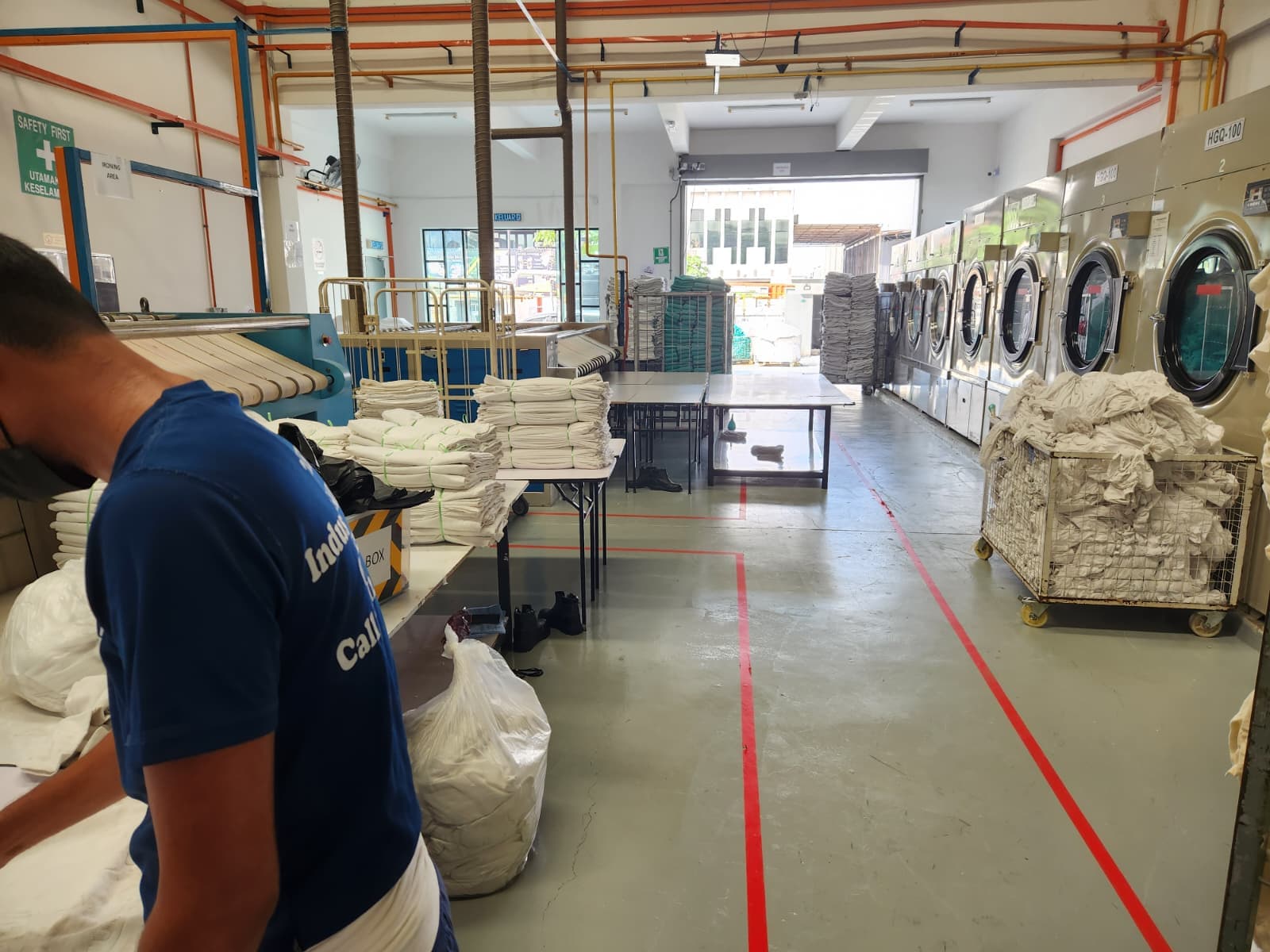
Linen moves through every ward, theatre, and clinic, which makes it a quiet but constant route for cross contamination if it is handled loosely. For a healthcare provider in Johor, infection control is not a single wash setting but a chain that runs from the point a sheet is removed from a bed to the moment a clean pack is opened again. This article walks through the basics so procurement and infection control teams know what good practice looks like and what to ask of a laundry.
Why linen is an infection control concern
Used linen carries body fluids, skin cells, and microorganisms, and it is handled by many hands across a shift. The risk is rarely the fabric itself but the points where soiled and clean items meet, where staff touch their faces, or where a contaminated trolley returns to a clean store. Treating linen as part of the infection prevention chain, not just as a logistics item, is the starting point.
Keeping clean and soiled linen strictly apart
The single most important control is physical separation of clean and soiled flows so they never cross. At Arifa we keep clean and soiled linen strictly apart across our two Johor Bahru factories, with separate handling areas, trolleys, and routes. A facility should be able to see that separation on a walk through, not just hear it described.
- →Separate receiving bays for soiled linen and dispatch bays for clean
- →Color coded or clearly labelled bags for infected and general linen
- →Trolleys that are washed and not shared between clean and soiled sides
- →Staff who do not move from the soiled side to the clean side mid task
What thermal disinfection actually means
Disinfection in a healthcare wash relies mainly on a combination of temperature, time, and the right chemistry, often called thermal disinfection. The wash holds linen at a defined temperature for a defined hold time so that microorganisms are reduced to a safe level, then chemistry and dilution finish the job. Ask any laundry to explain the temperature and hold time used for healthcare linen and how it is monitored, rather than accepting a vague claim that everything is hot washed.
Handling infected and fluid contaminated linen
Linen from patients with known infections, or any item heavily soiled with blood or body fluids, should be bagged at the bedside and never sorted by hand in the open. Water soluble or clearly marked bags let staff load contaminated linen straight into the machine without re-handling. This protects laundry staff and stops contamination spreading back into clean areas.
Proving it: traceability and audit
Infection control teams increasingly need evidence, not assurances, so a laundry should be able to show wash records, temperature logs, and a clear separation layout. Records also help during an outbreak investigation, when you may need to trace which batches went where. A provider operating around the clock should still produce a consistent, documented process on every shift.