Laundry volume is rarely flat. A conference, a public holiday, a wedding season or a sudden jump in hotel occupancy can double your linen load with little warning. This article covers how to plan for those spikes so a busy week does not turn into a linen shortage.
What causes sudden volume spikes
Spikes come from predictable seasons and from one-off surges, and it helps to separate the two. Peak holiday periods, school breaks and event seasons are foreseeable, while a last-minute conference booking or a group check-in is not. Knowing which kind you are facing changes how you respond, since one can be planned for and the other has to be absorbed.
- →Seasonal peaks like holidays and event seasons
- →One-off surges from conferences, weddings or group bookings
- →Occupancy jumps when a nearby venue draws crowds
Forecast the predictable spikes early
Most volume surges are visible weeks ahead if you look at your booking calendar. Share known peaks with your laundry partner in advance so capacity and scheduling can be arranged before the rush, not during it. The earlier the warning, the smoother the spike, because routes and wash slots can be planned rather than scrambled.
- →Flag known events and peak seasons to your laundry ahead of time
- →Confirm collection and return timing for the busy period
- →Agree how extra volume will be handled before it arrives
Hold enough stock to absorb the unexpected
Some surges cannot be forecast, so the buffer is your first line of defence. Holding extra linen in rotation lets you cover a sudden jump while the wash cycle catches up. Size that buffer against your realistic peak, not your average week, because the average is exactly when you do not need it.
- →Keep a stock buffer sized to peak demand
- →Rotate buffer stock so it does not sit and yellow
- →Review buffer levels as your business grows
Why processing capacity is the real constraint
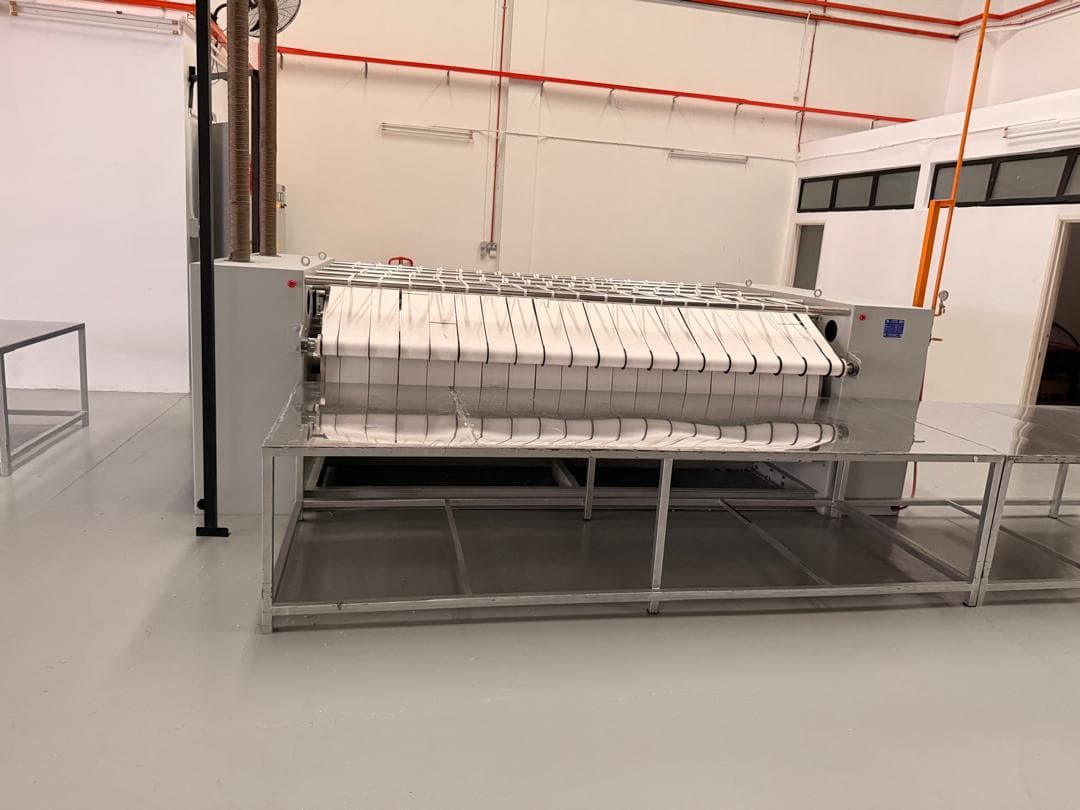
Holding stock helps, but if the laundry cannot wash the returned volume fast enough, the buffer drains and never refills. Real surge protection needs a partner with headroom in machines and hours. Arifa processes up to 25 tonnes a day across two Johor Bahru factories, with nine washer extractors and sixteen dryers, which gives genuine capacity to absorb a spike rather than just queue it.
Round-the-clock processing for surge periods
A spike that arrives in the evening cannot wait until the next morning if you need linen for the next service. Arifa operates 24/7, so volume returned late can still be processed overnight and back in rotation. That continuous operation is what lets clients such as hotels and hospitals across Johor ride out occupancy surges without running short.