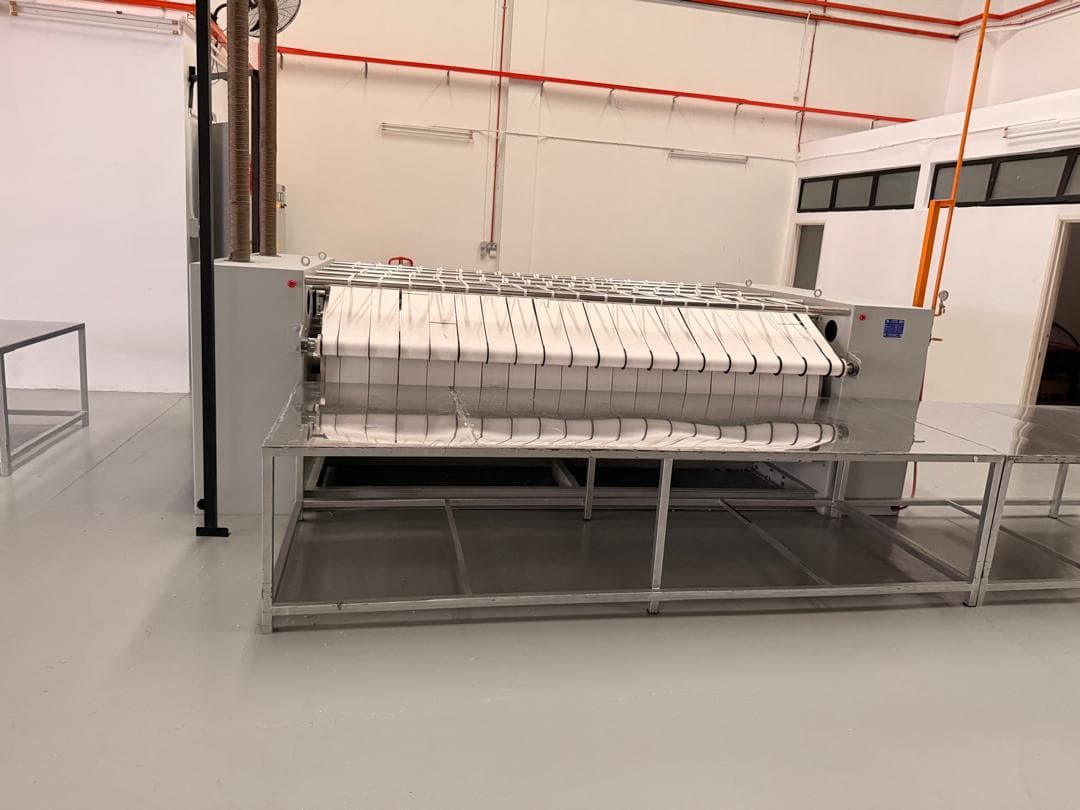
Senai's industrial estates run shifts around the clock, and every shift means uniforms that come back with grease, dust, or process residue. Washing those in-house ties up space and water, and rarely gets uniforms as clean as the work demands. This guide covers what factory uniform laundry actually involves and how a Johor commercial laundry sets it up so workers always have clean, sorted uniforms ready for their shift.
Why factory uniforms are harder than ordinary laundry
Factory soils are not the same as everyday dirt. Machine oil, metal swarf, food-process residue, and ground-in dust each need different handling, and mixing them in one wash can set stains or transfer grime between garments. A commercial laundry sorts by soil type and uses wash programmes matched to the contamination, which is hard to replicate with a stack of domestic machines.
Keeping clean and soiled uniforms apart
In a factory setting, cross-contamination is a real risk: a freshly washed uniform should never touch a soiled pile. Arifa keeps clean and soiled linen strictly separated through the whole process, from intake to packing. That separation matters most where uniforms carry process residue, because it stops a clean batch from picking up grime on the way back to your floor.
Sizing, sorting, and getting the right uniform to the right worker
A uniform contract is only useful if each worker gets their own correct size back, on time. The sorting and return system is what makes that work across hundreds of staff and rotating shifts. Agree the labelling and return method up front so the laundry can build a repeatable routine.
- →Per-worker labelling or pooled sizing, decided before you start
- →Sorting by size and department on return
- →A return schedule that matches shift patterns
- →A clear process for new starters and leavers
Turnaround that fits a 24/7 operation
A factory that never stops cannot wait days for uniforms. The laundry has to run on a cycle that keeps a clean set ready for every shift, which means consistent collection and delivery, not best-effort timing. Arifa has operated 24/7 since 2017, so the rhythm of round-the-clock industrial work is familiar territory rather than a special request.
What to confirm before signing a uniform contract
Before committing, pin down the operational terms that decide whether the service holds up week after week. These are the points that separate a supplier who can carry your volume from one who cannot.
- →How soil types are sorted and which wash programmes are used
- →How clean and soiled uniforms are kept apart
- →The collection and delivery schedule against your shifts
- →How damaged or worn-out uniforms are flagged and replaced