Energy is one of the biggest running costs in industrial laundry, and most of it goes to heating water and drying linen. Efficiency claims are easy to make and harder to verify, so it helps to understand where the energy actually goes. This article breaks down the real drivers in an energy efficient laundry and the operating choices that move them.
Where the energy actually goes
In a commercial wash process, the largest energy demands are heating wash water to the right temperature and drying linen after extraction. Washing itself uses relatively little mechanical energy compared with the thermal load of heating and drying. That is why genuine efficiency work focuses on getting more water out before the dryer and on not over-drying. Understanding this split is the first step to judging any efficiency claim.
- →Heating wash water to temperature
- →Drying linen after the wash
- →Mechanical washing and pumping, a smaller share
Extraction does the heavy lifting
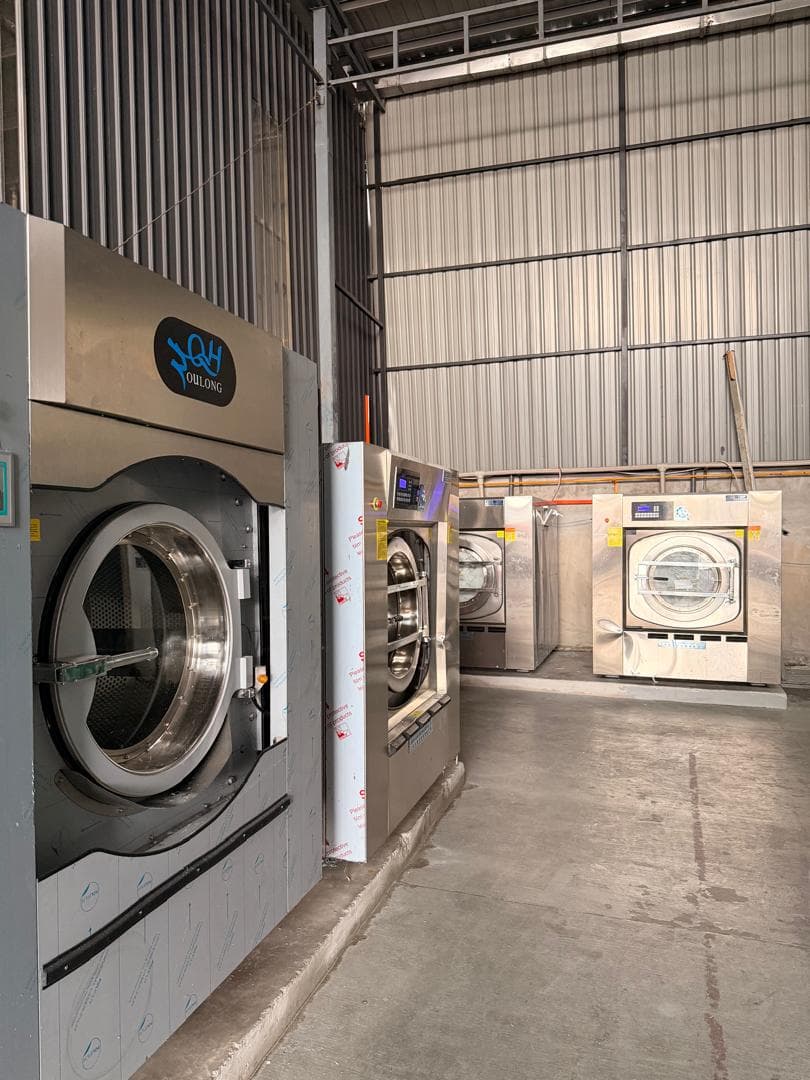
The more water a washer extractor spins out, the less the dryers have to evaporate, and evaporation is expensive. High-speed extraction at the end of the wash removes a large share of residual water before linen ever reaches a dryer. At Arifa our nine washer extractors and sixteen dryers are sized to work as a pair, so loads move through extraction and into drying without bottlenecks that waste heat. Matching extraction to drying capacity is one of the most practical efficiency moves a plant can make.
Full loads beat fast loads
A 100 kg machine run half full uses close to the same heat and water as a full one, so the cost per kilogram of linen rises sharply. Consolidating loads to run machines at proper capacity is one of the cheapest efficiency gains available, with no equipment change at all. This is where scheduling and intake planning matter as much as hardware. A plant running 24/7, as we have since 2017, can keep machines full around the clock rather than firing up cold for small batches.
- →Run machines near rated capacity, not half full
- →Schedule intake to keep machines fed
- →Avoid cold starts for small batches
Heat recovery and avoiding over-drying
Drying past the point of dry wastes energy and shortens linen life, so good plants dry to the right finish and no further. Heat recovery, where waste heat from one process pre-warms incoming water or air, reduces the load on boilers and heaters. Neither of these is visible in a sales brochure, so they are worth asking about directly. The combination of right-sized drying and recovered heat is where steady, real savings live.
What to ask before you believe an efficiency claim
Ask how extraction and drying capacity are matched, because a mismatch wastes heat regardless of equipment ratings. Ask how loads are consolidated and whether machines typically run near capacity. Ask whether any heat recovery is in place and how drying endpoints are controlled. Efficiency is an operating discipline as much as a hardware spec, so the answers should describe routines, not just machine models.