Most laundry operations are sized for a normal week, which means peaks, breakdowns, and sudden surges can leave you short. Overflow capacity is the backup that keeps clean linen flowing when your usual setup cannot keep up. This article lays out when you need it and how to plan for it before the crunch arrives.
When in-house capacity runs out
An on-site laundry is usually built for typical volume, not the worst day of the year. A machine breakdown, a staffing gap, or a sudden occupancy spike can push you past what your equipment can handle. When that happens, the choice is either a linen shortage or an overflow partner who can absorb the extra load.
- →Equipment breakdown or maintenance downtime
- →Seasonal occupancy peaks
- →Sudden large bookings or events
- →Staffing shortfalls on a shift
Why owning for the peak is expensive
Sizing your own laundry for the busiest week means buying machines and space that sit idle most of the year. That capital and floor area is locked up whether you use it or not. Overflow capacity flips the model: you carry a normal-week footprint and lean on an external partner only when you actually exceed it.
What good overflow capacity looks like
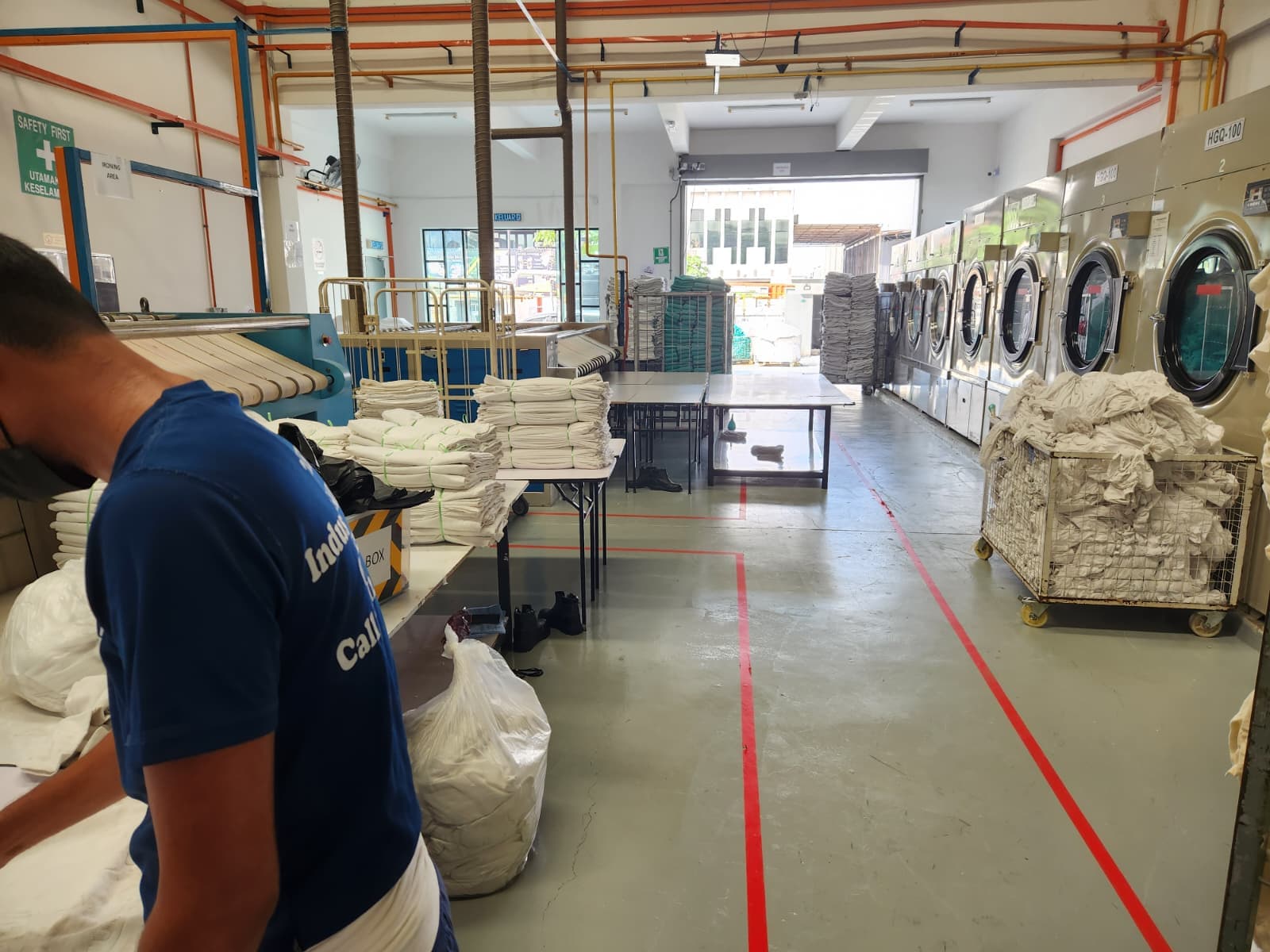
Overflow only works if the partner has genuine spare headroom, not a plant already running flat out. Arifa operates nine washer extractors, sixteen dryers, and 100 kg machines across two Johor Bahru factories, running 24/7, which is the kind of headroom that lets us take on a surge without dropping existing clients. The other half is responsiveness: capacity is only useful if it can be reached quickly.
- →Real spare capacity, not a full plant
- →Fast activation when you call
- →Clear pickup and return windows
- →Consistent standard under load
Planning overflow before you need it
The worst time to find an overflow partner is mid-crisis with linen piling up. Set the arrangement up in advance: agree how stock gets handed over, what volumes can be absorbed, and how fast turnaround will be under pressure. A standing arrangement turns an emergency into a routine handover.
Overflow as a permanent safety net
Overflow is not only for emergencies. Many operators keep a standing relationship so that breakdowns and seasonal peaks are covered by default, with no scramble required. Running 24/7 since 2017 means Arifa can act as that safety net at any hour, not just during business hours.
- →Covers breakdowns automatically
- →Smooths predictable seasonal peaks
- →Available around the clock