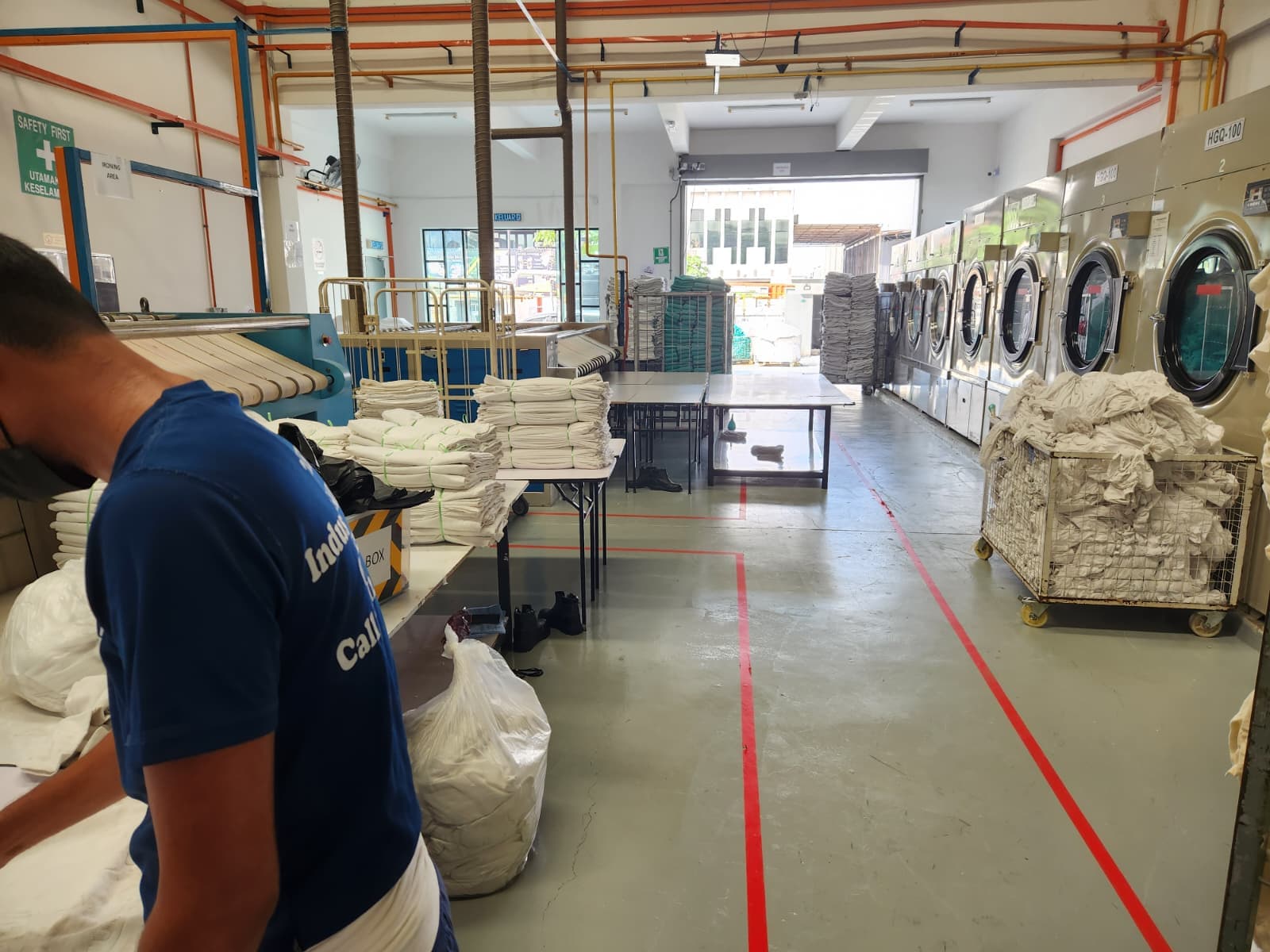
Dialysis clinics run tight, repeating session schedules, and linen turnover is part of keeping chairs ready. The volume is steady, the soil load can be heavy, and a slow or unreliable linen flow shows up immediately in the day's schedule. This article covers what good clinic linen handling looks like for dialysis units and what to expect from a laundry partner in Johor.
The linen rhythm of a dialysis unit
Dialysis sessions cycle through the day, and each one generates linen that has to be cleared, processed, and back in rotation before the unit runs short. Unlike a one-off procedure, the demand is predictable but relentless. A laundry partner has to match that rhythm with steady turnaround rather than occasional big batches.
- →Predictable, repeating session schedules drive demand
- →Steady turnaround matters more than occasional large runs
- →Running short on clean linen stalls the day's chairs
Handling a heavier soil load
Clinic linen from dialysis can carry blood and bodily fluids, so it needs proper soiled handling and a wash process built for that load. Set cycles on 100 kg washer extractors give consistent results rather than depending on who loaded the machine that day. The goal is linen that comes back genuinely clean and reliably processed, batch after batch.
Keeping soiled and clean linen apart
For any clinic dealing with bodily fluids, separation is non-negotiable. Arifa keeps clean and soiled linen strictly apart across both Johor factories, so soiled clinic linen never crosses paths with finished, ready-to-return stock. That single discipline does most of the work in preventing cross-contamination.
- →Soiled clinic linen routed away from clean output
- →No shared trolleys or staging between the two flows
- →Separation maintained from intake through return
What drives the cost of clinic linen service
Clinic linen pricing is shaped by drivers rather than a flat rate: volume and how predictable it is, soil level, turnaround expectations, and collection frequency. A heavier soil load and a tighter turnaround ask more of the process than light, flexible volume. Understanding these drivers helps a clinic scope a service that fits its real pattern instead of paying for the wrong shape.
- →Volume and how predictable it is week to week
- →Soil level and the wash process it requires
- →Turnaround expectations and collection frequency
Choosing a clinic linen partner in Johor
Capacity and reliability matter most for a unit that cannot afford to run dry. Arifa processes up to 25 tonnes a day across two Johor Bahru factories and has run 24/7 since 2017, with experience serving healthcare clients including Medivest and KPJ specialist hospitals. That base lets a clinic plan around a steady, dependable flow.