Staff uniforms sit against the skin all shift and move between patients, surfaces, and public areas, which makes them part of the hygiene picture rather than just workwear. Home washing is common but inconsistent, and it shifts the infection control burden onto individual staff. This article looks at clinical uniform hygiene and what a controlled laundering process adds.
Why uniforms matter for hygiene
A uniform picks up organisms from patient contact and the clinical environment over a shift, particularly on the cuffs, front, and anywhere that touches surfaces. While uniforms are not usually the main route of transmission, they are a route worth controlling. Treating them as part of the hygiene chain, not a personal item, changes how they are washed and worn.
The limits of home washing
Home machines vary widely in temperature, load size, and chemistry, so the disinfection achieved is inconsistent and unverifiable. A uniform may share a wash with household items, and there is no record that any defined temperature was reached. For roles with higher exposure, this uncertainty is the core weakness of relying on home laundering.
- →No verified temperature or hold time
- →Mixed loads with non clinical items
- →Variable detergent dosing and dilution
- →No records to support an audit or investigation
Change and wear routines that help
Good practice reduces how long a contaminated uniform stays in play and in clinical areas. Simple routines make a real difference even before laundering is considered.
- →Change into a clean uniform at the start of each shift
- →Change out of uniform before leaving the facility where possible
- →Keep bare below the elbows during clinical care
- →Change immediately if visibly soiled or contaminated
What professional laundering adds
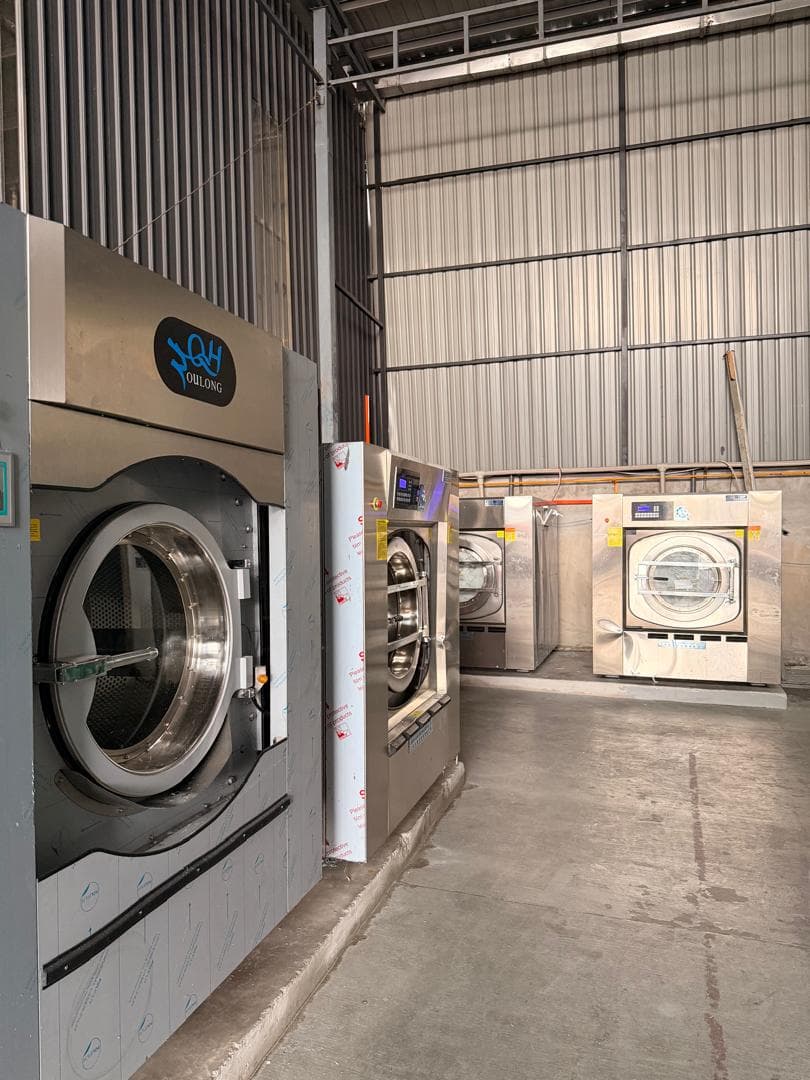
A professional laundry applies a defined, repeatable process with controlled temperature, chemistry, and dilution, and it keeps clean and soiled items strictly apart. That consistency is the difference: every uniform goes through the same validated wash rather than whatever a home machine happens to do. It also removes the burden and uncertainty from individual staff and produces records a facility can stand behind.