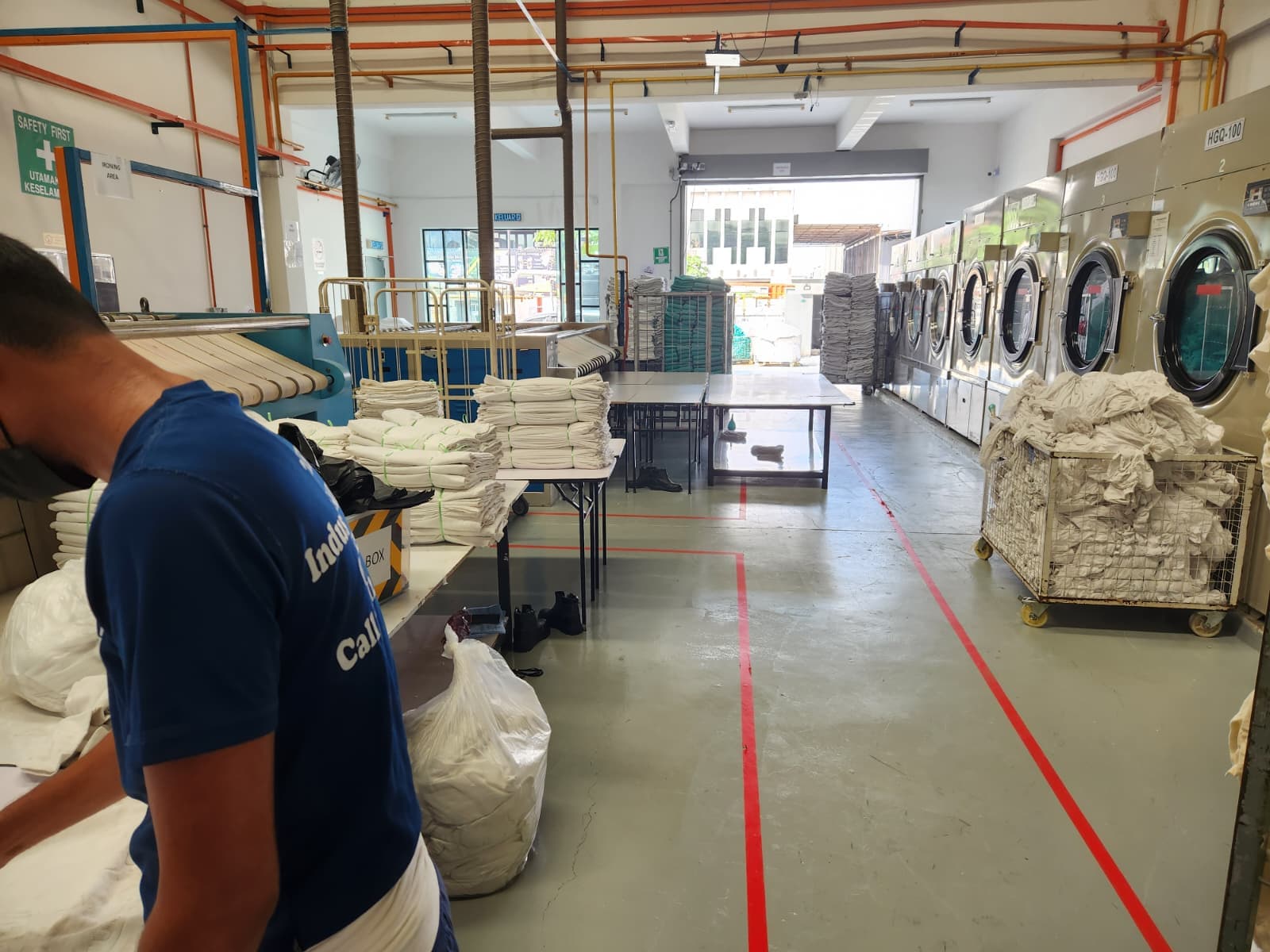
Choosing a laundry vendor on price alone is risky when the linen ends up on hospital beds or restaurant tables. A short, structured audit tells you whether a vendor's hygiene claims hold up in practice. This article gives procurement and operators a practical checklist to audit a laundry vendor, focused on what you can actually see and verify.
Start with the flow, not the brochure
The single most telling thing on a laundry visit is the path linen takes from arrival to dispatch. Walk it and confirm linen only ever moves from soiled to clean, never backward. If soiled intake and clean dispatch are properly separated, the rest of the operation usually follows. A vendor confident in their hygiene will happily walk you through the line.
Check separation in space and equipment
Look for genuinely separate zones for clean and soiled linen, with trolleys and storage assigned to one side or the other. Shared trolleys or clean linen parked near soiled intake are red flags worth raising on the spot. At Arifa, clean and soiled linen are kept strictly apart across two Johor Bahru factories, and a site visit should make that visible rather than just stated. What you want is a layout that enforces separation, not staff who have to remember it.
- →Separate clean and soiled zones
- →Dedicated, non-shared trolleys
- →Clean storage away from soiled intake
Ask about process, not just equipment
Machine counts matter, but how they are used matters more. Ask how loads are sorted, how disinfection temperatures are reached for clinical linen, and how the plant copes when volume spikes. Capacity is part of hygiene too, because a plant that cannot keep up lets soiled linen sit and rushes cycles. A vendor running real volume, like up to 25 tonnes a day, should be able to explain how they hold standards under load.
Look for records and references
Hygiene that is real tends to be documented, so ask what is logged and how. Wash temperature records, maintenance routines, and traceability of which linen went where all signal a controlled operation. References matter too: a vendor serving hospitals and hotels is being audited by demanding clients already. Arifa works with clients such as Hospital Sultanah Aminah, KPJ specialist hospitals, Medivest, Puteri Pacific, and Berjaya Waterfront, which is the kind of reference base worth checking.
- →Wash and disinfection records
- →Maintenance and cleaning routines
- →Traceability of linen batches
- →Reference clients in demanding sectors
Match the audit to your linen type
A hospital should weigh disinfection and separation heavily, while a restaurant should focus on grease removal and turnaround. Set your audit priorities by the risk your own linen carries, not a generic list. This keeps the visit focused on what actually protects your operation. The right vendor for a clinic may differ from the right one for a hotel, and a targeted audit surfaces that.
- →Healthcare: disinfection and strict separation
- →Food service: grease removal and turnaround
- →Hospitality: finish quality and consistency
Turn the visit into a decision
After the walk, score the vendor on separation, process clarity, records, and capacity for your volume. Note where answers were vague or the layout did not match the claims, because those gaps are where problems start. A good vendor leaves you with specifics you can verify, not just reassurance. That is the difference between a hygiene claim and hygiene you can trust.