Aprons and kitchen cloths take more abuse than any other textile in a restaurant. They soak up oil, sauce, protein and char every service, and when they come back grey or smelling stale, staff stop wearing them properly. This guide covers what makes apron laundry different and how a commercial process keeps your kitchen stocked and presentable.
Why kitchen aprons are harder to wash than table linen
Table linen mostly carries food residue and the occasional wine spill. Aprons and kitchen cloths carry concentrated grease, animal fat, blood and burnt-on soil that bonds to fibres once it dries. A normal wash cycle that works on napkins will leave aprons looking clean but feeling tacky, and that residue traps odour and breeds bacteria over time.
- →Heavy oil and fat needs higher wash temperatures and the right detergent chemistry
- →Protein stains like blood set permanently if washed hot too early
- →Dried-on soil needs longer wash time, not just more heat
Keeping soiled kitchen cloths away from clean linen
Kitchen cloths are some of the dirtiest items in any hospitality operation, so they should never share handling space with clean output. At Arifa we keep clean and soiled linen strictly apart through the whole process, which matters most for items this heavily contaminated. That separation protects your front-of-house linen from cross-contamination by grease and bacteria carried on cloths.
- →Soiled aprons collected and bagged separately from table linen
- →No clean item passes through a soiled handling zone
- →Wash programmes matched to soil level, not mixed into one load
What a proper apron wash process looks like
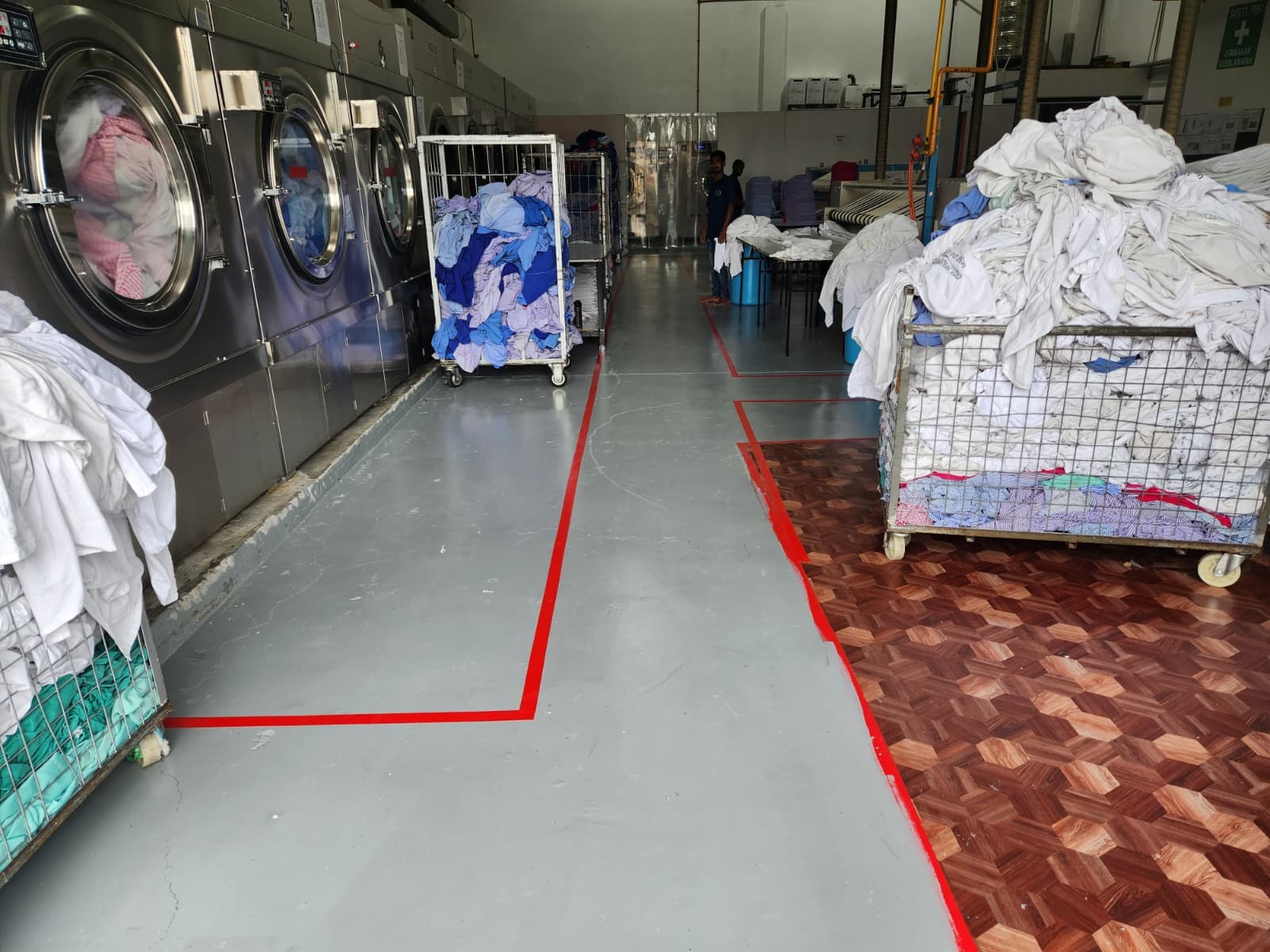
Heavy soil needs a graded approach: a cooler pre-wash to lift protein, then a hot main wash with detergent built for grease, then a thorough rinse so no chemical or residue stays in the fabric. Our 100 kg washer extractors give the mechanical action and dwell time that domestic or under-counter machines cannot. The goal is fabric that feels clean, not just looks clean.
- →Pre-wash to release protein before heat sets it
- →Hot main wash sized to the grease load
- →Full rinse and high extraction so cloths dry fast and smell neutral
Stock levels and rotation for a busy kitchen
A kitchen that runs out of clean aprons mid-service ends up reusing dirty ones, which defeats the point. The fix is holding enough stock in rotation so there is always a clean set coming back while another is in use. Work out your daily apron and cloth usage at peak, then keep enough in circulation to cover collection, washing and return without a gap.
- →Count peak daily usage, not average
- →Hold separate par levels for aprons, service cloths and oven cloths
- →Pull worn or thinning cloths out of rotation before they fail
Turnaround and collection for Johor restaurants
Kitchen textiles need a predictable cycle so the team knows clean stock arrives before the next service. Arifa runs 24/7 from two factories in Taman Ekoperniagaan, Johor Bahru, which gives flexibility on collection and return timing across Johor Bahru, Pasir Gudang, Senai and the surrounding areas. A fixed schedule beats ad hoc pickups because your par levels stay stable.